Over the years I've seen plenty of companies whose crisis plan sat in a binder that none of their staff had ever read. Here I set out what training has to cover to be of any use in a real situation, and why it usually breaks down on communication rather than courage.
Ten minutes when nobody knew who was in charge
Someone walks into the building and starts behaving inappropriately. They aren't shouting or breaking anything; they simply refuse to sign out and won't leave. The receptionist calls a colleague, the colleague calls the manager, and the manager is in a meeting. Ten minutes pass before anyone willing to make a decision can be found.
Nothing dramatic happened in those ten minutes. But if it had, the whole company would have been without leadership at that moment. And this is the typical picture of crisis readiness I find at clients: the plan exists, but nobody knows they are the ones meant to act on it.
It isn't a question of courage. Most people aren't cowards; they just aren't sure they have the right to decide. A document won't give them that certainty. Practice will.
Why training on paper doesn't work
The most common form of crisis preparation goes like this: once a year an email goes out with an attachment, staff click to confirm they've read it, and that's the end of it. On paper, the requirement is met. In practice, nothing has changed.
The problem is how people function under pressure. As the heart rate rises, attention and the ability to choose between options narrow sharply. Nobody remembers page eight of the policy at a moment like that. All that comes to mind is what they have actually practised.
That's why my minimum is that every employee physically walks through what the plan asks of them at least once. Which way out. Who to call. What to say. Where to meet. When you walk it on your own two feet, it stays with you in a way that words on a screen don't.
Rules that make sense without heroics
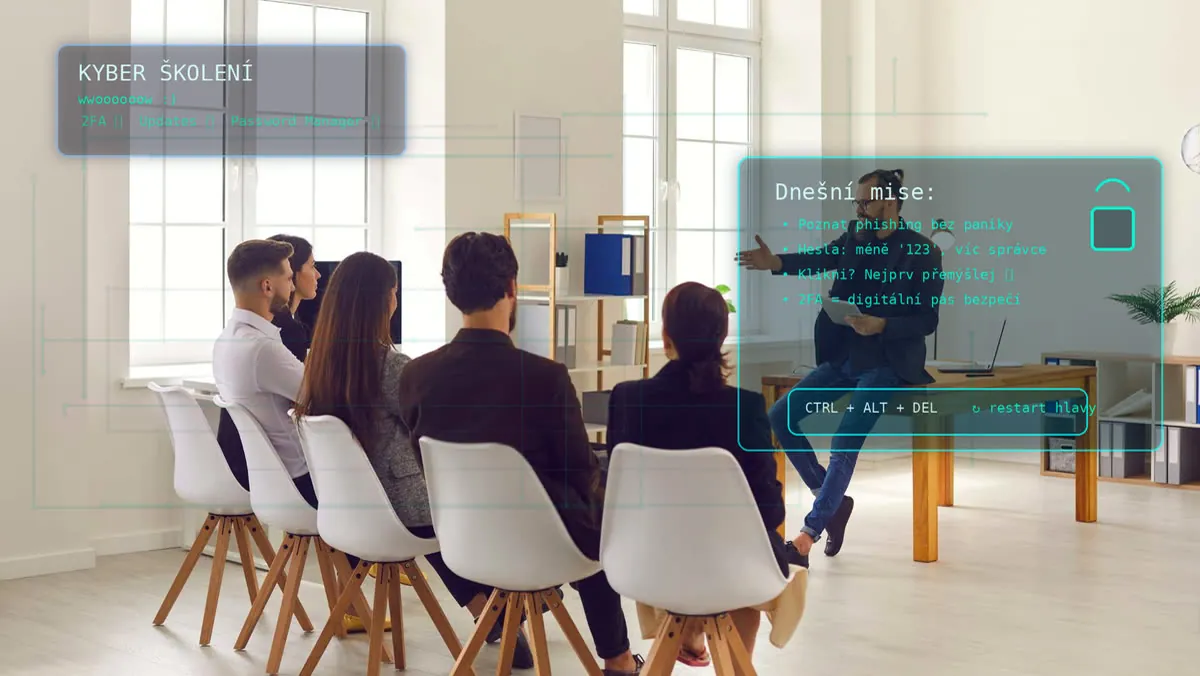
When I teach staff how to behave in a crisis, I always start with what they shouldn't do. Company training often breeds heroes without meaning to, and an untrained hero is a risk to themselves and everyone around them.
The hardest rule to get across is usually the one about property. People instinctively try to save things: documents, a laptop, the till. It has to be said out loud, and more than once: property can be replaced, people cannot.
The rules I treat as the basics fit on a few lines:
- Report suspicious behaviour or an incident immediately, not once it has been confirmed.
- Don't overestimate your own abilities. Physical intervention is the last resort, not the first.
- Follow the instructions of the person in charge, even if they seem overly cautious.
- Protect yourself and others. Not property, not ego.
Simulation is uncomfortable, which is why it works
A comfortable drill tests nothing. The real value comes only from a situation where people don't know the exercise has started, or where something doesn't go to plan.
Some of what a simulation shows is sensitive, but it matters. In every team there is someone who naturally takes the initiative under pressure, and it is often not the person the company named in the plan. That's worth knowing in advance.
Simulations regularly reveal four things you won't find on paper:
- Who actually knows what to do, and who only claims to.
- Where confusion arises, and at what point the chain of information breaks.
- How fast bad information spreads. Usually faster than the correct version.
- Who naturally takes the lead. And who certainly doesn't.
Communication is the weakest link
When I go through an incident with a company afterwards, the same three sentences come up again and again: I thought someone else was dealing with it, I didn't want to cause alarm and it wasn't clear who was supposed to decide.
All three have the same cause. There is no agreement on who reports what to whom, or on who has the authority to say “yes, we're on it”. Without that, everyone waits for someone else and time slips away.
A crisis report should be brief, unambiguous and free of speculation. Who is calling, from where, exactly what they can see, how many people are there and what they have already done. No judgements, no guessing at motives. That comes later.
I recommend putting three things on a single sheet displayed at reception and on every floor: who to call first, who to call as a backup and the emergency number. It looks trivial. In practice it cuts minutes off the response.
Everyone has a role, even outside the security team
Crisis readiness isn't the job of one security manager. It only works when everyone knows what is expected of them, and what isn't.
Reception is the first point of contact and the first filter. It needs clear limits on when it may turn someone away, and the assurance that staff won't be reprimanded for doing so. Team leaders are responsible for making sure their people physically know the evacuation route. Management has one role, but a crucial one: deciding who makes the call when management itself can't be reached.
Then there's a group that is often forgotten: contractors, cleaners, tradespeople and temporary staff. They tend to be in the building at the most unusual hours, and they usually know nothing at all about the crisis plan.
Key takeaways
Crisis training isn't meant to turn an accountant into a bodyguard. Its purpose is to make sure that in the first few minutes, before anyone arrives from outside, people don't freeze and don't make the situation worse.
In practice it comes down to three things. Everyone knows who to call. Someone has the authority to decide even when the boss isn't on site. And everyone has actually tried it at least once, rather than just reading about it.
If you have a crisis plan and aren't sure your people could really act on it, the quickest way to find out is a dry run. I'm happy to talk you through how to set up a drill so that it is a genuine test rather than theatre. The consultation is without obligation, and whatever I learn during it stays between us.
“In a crisis, people don't do what's right. They do what they've practised, and if they've practised nothing, they wait.”— Robert Václavík