Writing about an active shooter isn't easy, but it's a subject companies should discuss factually. Not because I want to spread fear, but so that people know the first reaction has to be simple, fast and focused entirely on survival.
The first reaction can't wait for perfect information
When an attack happens at work, the first few moments are usually confused. People hear bangs, shouting, running and conflicting information, or simply see others starting to move. In a situation like that, there's no time for lengthy checking.
The basic decision is simple. If you can escape safely, get away. If you can't escape, hide and reduce the risk. If you're able to contact the emergency services, keep it brief and follow their instructions.
This subject doesn't belong in companies merely as a box-ticking training session. It belongs there because people under stress don't read manuals. They do what has already become ingrained.
Management should expect people to react in different ways. Some will run, some will freeze, some will want to call their loved ones. Preparation should reduce these reactions to a few steps that people can still carry out under stress.
- get to safety
- contact the emergency services
- follow their instructions
Escape comes first, if it's genuinely safe
When there's a clear way out, away from the threat, escaping is usually the best option. That doesn't mean running into the unknown. It means moving quickly away from the danger area, not exposing yourself unnecessarily to the attacker's view and not wasting time collecting your belongings.
Companies often plan evacuation routes for a fire, but less often for a violent attack. Yet the usual escape route may not be suitable in that situation. Employees should know more than one way to move through the building.
I don't encourage heroics during an escape. Helping someone else makes sense as long as it doesn't create another casualty. Leaving the area quickly and passing information to the responding services can be the greatest help of all.

Hiding means reducing visibility and noise
If escape isn't possible, the aim is to put a barrier between yourself and the threat, limit how visible you are and keep the room quiet. Locked doors, lights switched off, a silenced phone and distance from the entrance can all reduce the risk.
Staying calm doesn't mean not feeling afraid. It means keeping movement to a minimum, not looking out into the corridor out of curiosity and not spreading unverified information. Every sound and every movement can attract attention at the wrong moment.
If there are several people in the room, someone needs to quietly take charge of the basics: close the door, move people out of the direct line of sight, silence phones and prepare the information for the emergency services.
Hiding should be an active decision, not passive waiting in the middle of the room. People should move out of direct view from the door, silence their devices and be ready for police instructions as soon as it's safe to receive them.
- stay calm and keep movement to a minimum
- secure the room as far as possible
- avoid unnecessary exposure to risk
- follow developments only from a safe position
Communication must be brief and usable
A call for help should above all give the location, the nature of the incident, the direction in which the threat is moving, the number of injured if it's safe to say, and where the caller is. Long explanations can cause delay.
A company should decide in advance who talks to the emergency services, who informs employees, who has access to the building plans and who waits for police instructions. Without this preparation, chaos breaks out on several fronts at once.
During an incident, I don't try to manage the situation remotely through group messages if that puts people at risk. One short, clear, verified piece of information is worth more than any amount of speculation.
Employees should also know that when the police arrive, their instructions may seem harsh or curt. At that moment, the point isn't comfortable communication but quickly telling the threat apart from people who are safe. Cooperating and keeping your empty hands visible can help prevent confusion.
Management's responsibility starts before any incident
The role of employees and management doesn't begin at the moment of an attack. It begins with preparation: clearly defined crisis procedures, trained people and designated people in charge. These aren't formalities to be filed away in an office folder.
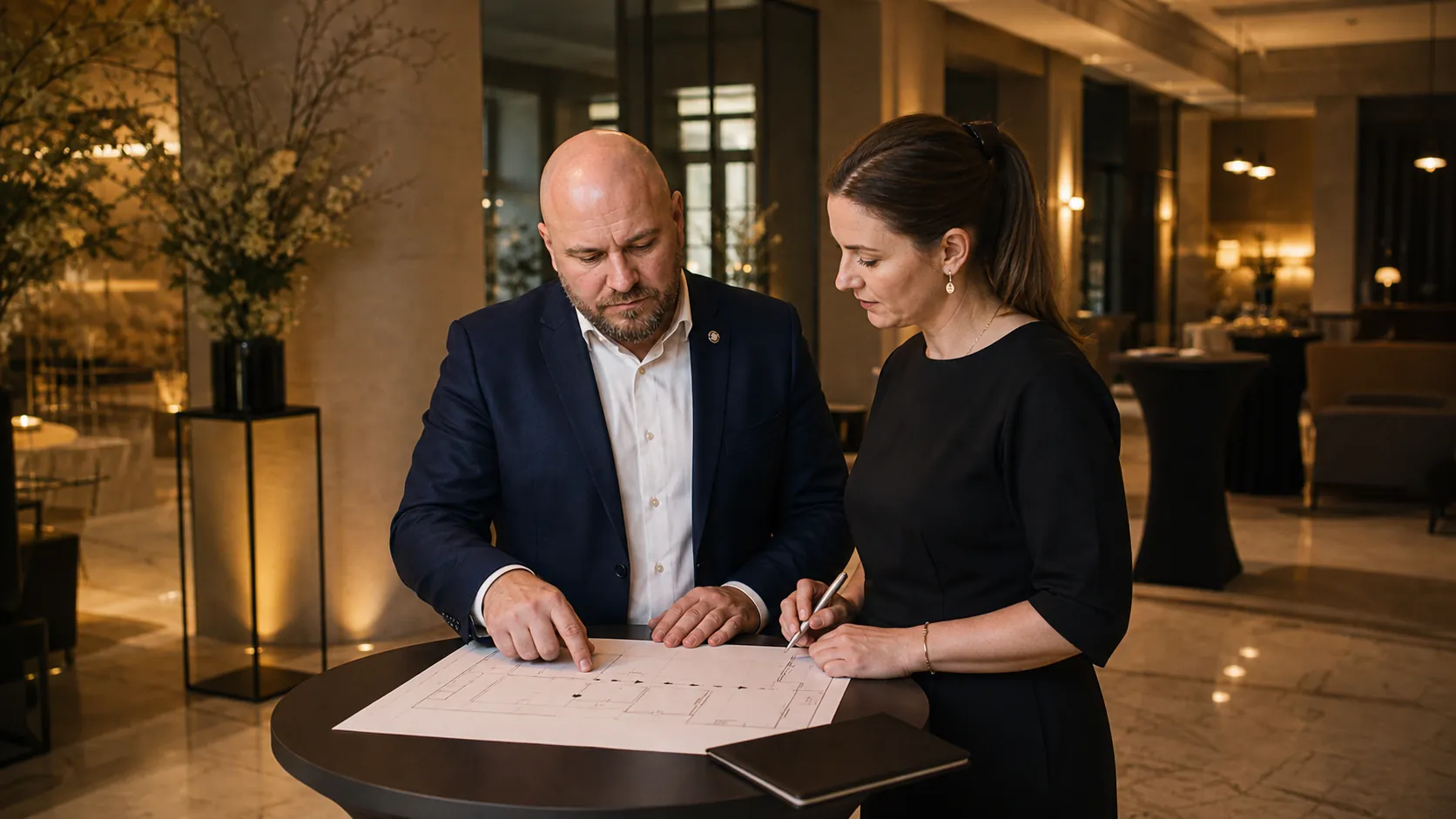
Every building has a different layout, different entrances, different visitor arrangements and a different kind of operation. That's why I'm not keen on generic posters with no link to the specific site. Employees need to know what applies in their own building.
Once the situation is under control, the next steps are reviewing the incident, adjusting security procedures and communicating openly with employees. Silence or playing the incident down can prolong the stress and erode trust in the organisation.
Preparation also covers visitors. Guests, suppliers and external staff don't know the building the way employees do, so reception and the people in charge must know how to direct them quickly in a crisis.
- clearly defined crisis procedures
- trained employees
- designated people in charge
- reviewing the incident
- adjusting security procedures
- open communication with employees
Conclusion: preparedness should simplify the response, not frighten people
An active shooter is an extreme situation, and no sensible person promises a simple solution. Even so, preparation matters a great deal. It helps people decide faster, reduce the risk and give the responding services information they can use. When normal operations break down, simplicity is what makes the difference.
If you'd like to review your company's crisis procedures, escape options and the roles of reception, management and employees, we can do so on a no-obligation basis and without scaremongering. The aim is a practical plan that people understand long before they might ever need it.
“In an extreme situation, a complicated manual won't help people. A simple procedure they already know will.”— Robert Václavík