When the security situation abroad deteriorates, a client doesn't need grand words. They need someone who can assess what is really happening, prepare a route, keep communication going and help a family or team reach a safer environment.
Crisis evacuation doesn't start at the airport
When people talk about evacuation, they often picture the final moments before take-off. In practice, though, what decides the outcome is a much earlier phase: assessing the situation, the availability of routes, movement on the ground, communication with the client and the ability to separate verified information from noise.
With clients, my main concern is that decisions aren't made too late. If the security situation in an area is getting worse, transport hubs are closing or the mood on the streets is changing, waiting can narrow the options. That doesn't mean panic. It means being prepared.
Crisis evacuation and moving people safely require a calm approach. The client needs to know what to prepare, who to stay in contact with, where to go and when to keep the details of the journey to themselves.
Even before a decision to move is taken, I check documents, medical needs, access to cash, communication equipment and contact details for anyone who is staying outside the main group. These things look ordinary, but in a crisis they can bring a whole plan to a halt.
First, I check what has actually changed
At the outset, I assess whether we're dealing with a sudden escalation of conflict, political unrest, the closure of airports or borders, or a security incident that endangers civilians. Each situation calls for a different pace and a different way of making decisions.
Public reports are only one layer. What matters is the local reality: whether routes are passable, the mood at checkpoints, the availability of accommodation, whether communications are working and whether local partners can confirm what is usable.
I don't sell the client certainty where nobody has any. I tell them what we know, what we don't know and which option makes most sense at that moment.
- a sudden escalation of armed conflict
- political unrest or protests
- the closure of airports or borders
- security incidents endangering civilians
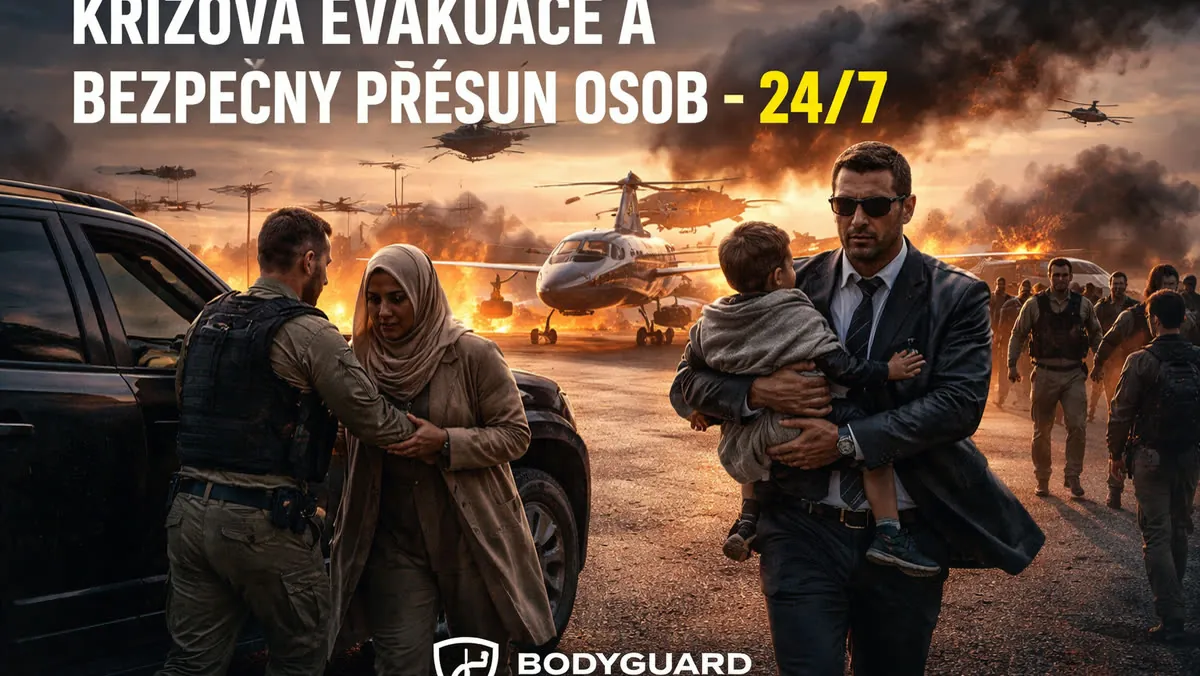
Routes are planned for safety, not comfort
During an evacuation, priorities often shift. The fastest route may not be the most suitable, and the nearest airport may not be usable. That's why I plan a safe route in stages and keep checking whether conditions have changed.
The destination may be a safer location, a working airport, a border or a place from which the journey can continue by other means. What matters is keeping people moving and being able to respond to change.
Protecting people on the move isn't just about physical presence. It means coordinating timing, information, vehicles, luggage, documents and contacts at the other end of the route.
Moving a group requires discipline. Everyone must know how much luggage they're taking, where to meet and whom to report any change to. Individuals wandering off on their own can complicate a departure more than any traffic hold-up.
- assessing the security situation in the area
- planning a safe route and means of relocation
- coordinating transport to safe locations or a working airport
- continuous communication with the client and local partners
- protecting people during the move
Different clients, different weak points
An international corporation has to think about its employees, internal communication and decision-making across its branches. An investor or entrepreneur may be visible because of their wealth, their business dealings or media attention. A diplomatic mission has a different protocol and different ties to the local environment.
Humanitarian organisations often work in demanding conditions, where safety has to be balanced against their responsibility to the team in the field. Private clients and families, for their part, need their privacy protected, calm communication with the children and practical arrangements for luggage, medication or documents.
That's why I don't use one scenario for everyone. The underlying logic is the same, but the execution has to fit the people, the place and wherever their greatest vulnerability lies.
With corporate clients, there's also the question of duty of care towards employees. You can't think only about management and forget the people in the field who have no support of their own. A practical plan has to state who is covered and how to reach them.
- international corporations
- investors and entrepreneurs
- diplomatic missions
- humanitarian organisations
- private clients and families
Communication must be sparing and precise
In a crisis, over-communicating is almost as dangerous as saying nothing. Too many messages create confusion; too few create panic. The client needs clear instructions: what to do now, what to expect next and when the next update will come.
I keep the details of the route, timings and contacts within a small circle of people. Not because every piece of information is secret, but because the more people it passes through, the greater the risk of a mistake or a leak.
The team has to be able to speak to the client calmly even when the plan is changing. A change of plan isn't a failure. The failure is pretending the original plan still stands when reality shows otherwise.
With families, I also pay attention to how information is passed on to children and older family members. A calm, short and truthful instruction is better than trying to make light of everything. People under pressure need to know what to do.
Conclusion: evacuation is controlled decision-making under pressure
Crisis evacuation and moving people safely aren't about dramatic gestures. They're about timely assessment, usable routes, verified contacts and calm communication with people who need to reach a safer environment.
If you have family members, a team or key people in a higher-risk area, we can review your preparedness and possible relocation options with no obligation. The point is to have a plan before the options start to close.
“In a crisis evacuation, the most valuable thing is a calm plan that can change as reality demands.”— Robert Václavík