I've protected people on the ground since 2009, and in most companies I find the weakest point isn't the technology. It's that staff don't know what to do first. Here I describe training that holds up under stress: the rules I give reception staff, why I insist on drills and where communication most often breaks down.
The question reception staff usually can't answer
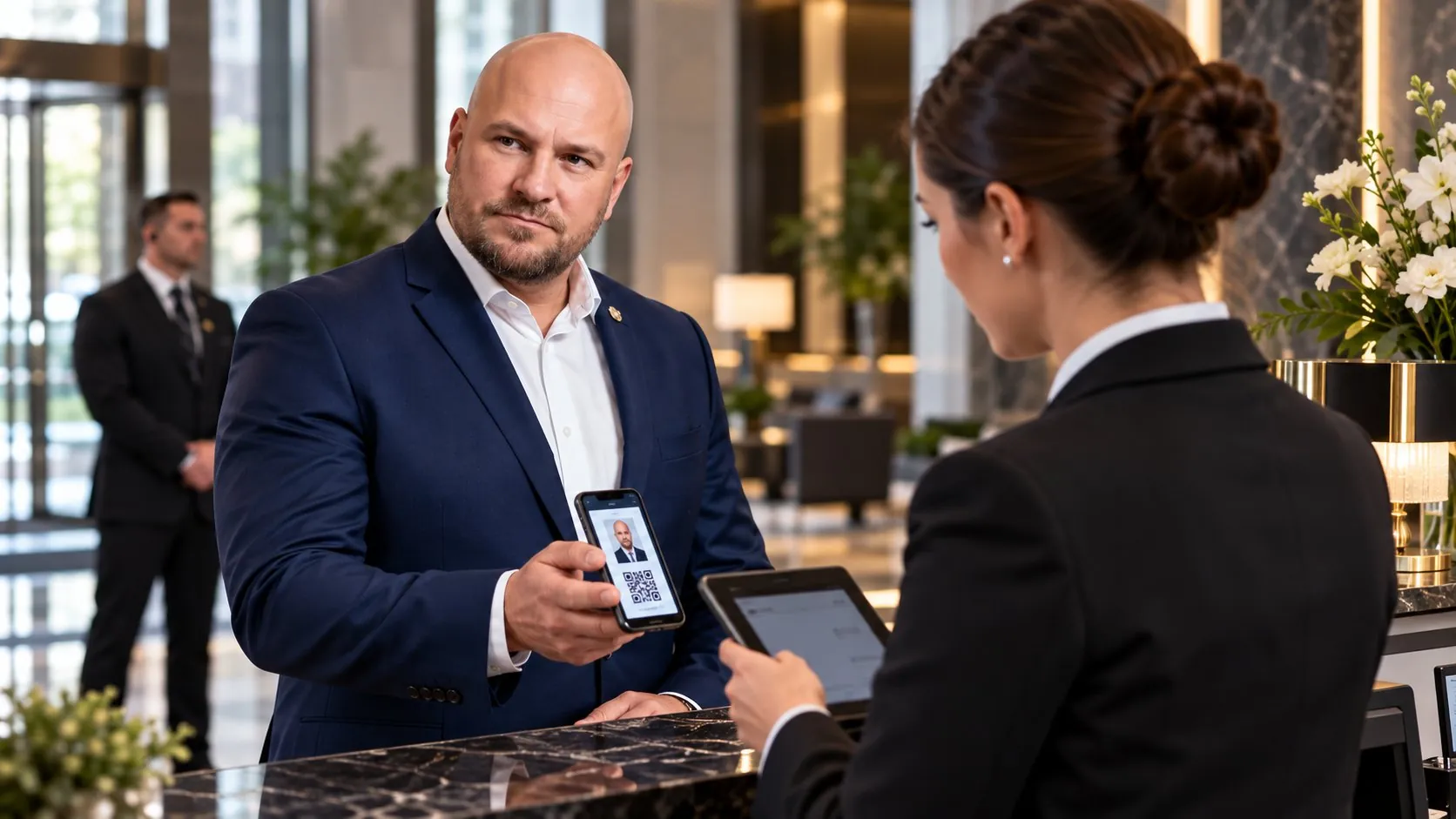
When I take on a new site, I ask the reception staff two things: where is the nearest fire extinguisher, and which way is the escape route? They usually know, because it's on the signs. Then I ask something else. What would you do if an agitated person walked into the lobby, talking loudly, and refused to leave? At that point there is usually silence.
I don't see that as a failing on their part. Nobody had ever answered that question for them. And that is exactly how most workplace crises look: they don't start dramatically. No sirens sound, nobody shouts “look out”. They start quietly, with odd behaviour at the entrance, confusion in a corridor or someone saying “it's probably nothing”.
I've worked in this field since 2009 and have seen enough situations to know where they break down. It isn't the technology or the number of security staff. It comes down to one thing: whether the person who notices the problem first knows what to do at that moment and who to tell.
Why paper-based training won't save anyone
In the Czech Republic, security training is often treated as a compulsory formality. A presentation, an attendance sheet, a signature, done. The paperwork is in order and will pass an inspection, but nobody takes anything away from it.
The problem is that a crisis doesn't follow a policy, and it won't wait for anyone to finish reading one. Under stress, attention narrows, precision goes and people reach for what is ingrained, not for something they once saw on a slide.
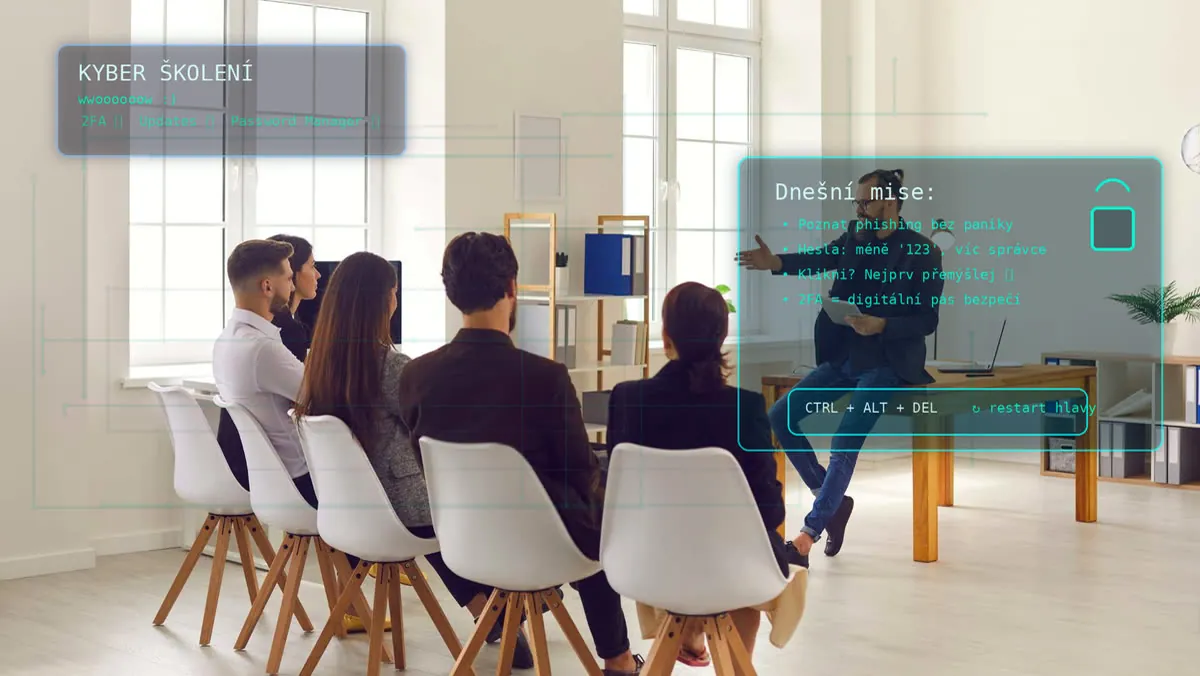
Real training therefore has a single aim: people should know what to do automatically, even when they're frightened. It also has to start from the real risks of your particular operation. A production hall faces different situations from a showroom in central Prague with its reception opening straight onto the street, or an office floor with restricted access. A generic syllabus downloaded from the internet won't do that job.
Rules people remember even under stress
One of the biggest mistakes is expecting staff to “come up with something”. In a crisis people improvise, and improvisation breeds chaos: two people do two contradictory things, each convinced they are helping.
Simple rules work even when nobody can remember the name of the document they're written in. In practice, the hardest one is putting people before property. I've met staff who tried to stop someone at the exit because letting them leave with the goods felt unacceptable. Goods can be replaced. People cannot.
That's why I give companies rules that fit on a single card and can be said out loud in a few seconds:
- Report suspicious behaviour or incidents early, even if you're not sure.
- Don't overestimate your abilities, and don't attempt an intervention you aren't trained for.
- Follow the instructions of the person in charge, not your own reading of the situation.
- Protect yourself and others, not property and not your own ego.
Drills: unpleasant but useful
Nobody looks forward to a drill. It disrupts the working day, people feel awkward and there's always someone who dismisses it as theatre. Even so, I consider it the most useful part of any training.
I recommend starting with an announced exercise rather than a surprise: a building evacuation in which people actually walk the escape routes, a simulated attempt at unauthorised entry, an IT system outage. Straight afterwards, hold a short debrief with everyone while they still remember what they were thinking and why. The debrief is often more valuable than the drill itself.
What matters most to me is who people actually follow. The leader on the organisation chart isn't always the person others listen to under pressure. Sometimes it's a well-liked, trusted colleague from operations. You can plan for that, but first you have to know about it.
A drill shows you things no presentation ever will:
- who really knows what to do, and who just nodded along;
- where confusion sets in, usually at the hand-offs between floors, shifts and departments;
- how quickly bad information spreads;
- who naturally takes the lead, and who shouldn't.
Communication: where it most often breaks down
Communication breaks down for one reason above all: people aren't sure who to report to, or who is making the decisions at that moment. Until that is agreed in advance and said out loud, they will keep quiet and wait. And waiting usually makes things worse.
Crisis communication that works has four qualities: it is brief, unambiguous, calm and addressed. Addressed means the instruction goes to a specific person, by name, not to the room. “Someone call the emergency services” usually means nobody does.
Then there is the culture, which no policy can fix. Nobody should be made to look foolish for reporting something that turns out to be nothing. A false alarm costs a few minutes. An observation kept quiet can cost a great deal more.
After an incident, when I go through what actually happened with a client, the same three sentences come up every time, and each one comes back to that uncertainty:
- “I thought someone else was dealing with it.”
- “I didn't want to cause alarm.”
- “It wasn't clear who was supposed to decide.”
Roles: everyone should know where they stand
A crisis can't be run by a show of hands. Everyone should know their role, and every role needs a deputy. A crisis won't wait for someone to come back from holiday or an off-site meeting. A role with only one holder isn't a role; it's a weak point.
One more thing I see again and again: people read management very accurately. If the leadership regularly skips drills because it has a more important meeting, no amount of training will make the subject feel serious again.
The reverse also holds. When a manager lines up with everyone else, it saves a great deal of persuading.
In practice, these roles should be settled before anything happens:
- who calls the emergency services;
- who controls the entrances, and who accounts for people at the assembly point;
- who speaks to the police and fire service;
- and who does not speak to the media or post on social media. Companies underestimate this last point, and pay for it long after the crisis is over.
Key takeaways
Crisis training isn't about heroics, and it isn't about turning staff into semi-professional security officers. It's about not wasting the first few minutes: making sure whoever spots a problem knows they must report it, who to report it to and what to do until someone better qualified arrives.
If you take one thing from this article, let it be this: the rules must be simple enough to work even when nobody can remember them. Short, practised, with clearly assigned responsibility. Everything else is paperwork.
If you're not sure how your own workplace would fare, look at it through this lens. Ask two or three people at random, at reception and on the operational side, what they would do first. Their answers will tell you more than any review of your documentation.
If you'd like, get in touch. We'll go through your risks with no obligation and work out whether training or a drill makes sense for you, or whether it's enough to fine-tune a few things you already have in place. No pressure, no commitment, and everything we discuss stays between us.
“The difference between an incident and a disaster isn't the technology. It's whether the person who notices the problem first knows what to do and who to tell.”— Robert Václavík