I've worked in close protection for many years, and in that time I've learned that the hardest part of a VIP escort happens before the client even leaves the house. Here is how I actually plan a route, what I do when the programme changes at the last minute, and why the driver is part of the security team rather than just the transport. This is how I do it in practice, not how it looks in films.
The early-morning call and a programme that no longer stands
A typical situation from my own experience: the client calls early in the morning. A meeting that was due to take place in the city centre is moving to the other side of town and starting earlier. On top of that, one of the main roads is being closed somewhere. The plan I went through the night before is now useless.
This is a normal day, not the exception. It is exactly here that you see the difference between a professional escort and someone who simply rides in the car with the client. Either you have alternatives ready and know which way you can go and where you can stop, or you are improvising in traffic with the client in the back seat.
That's why you can't describe VIP protection as “babysitting” someone. It is planning work: most of it happens in advance, and only a small part of it is ever visible.
An escort the people around you aren't meant to notice
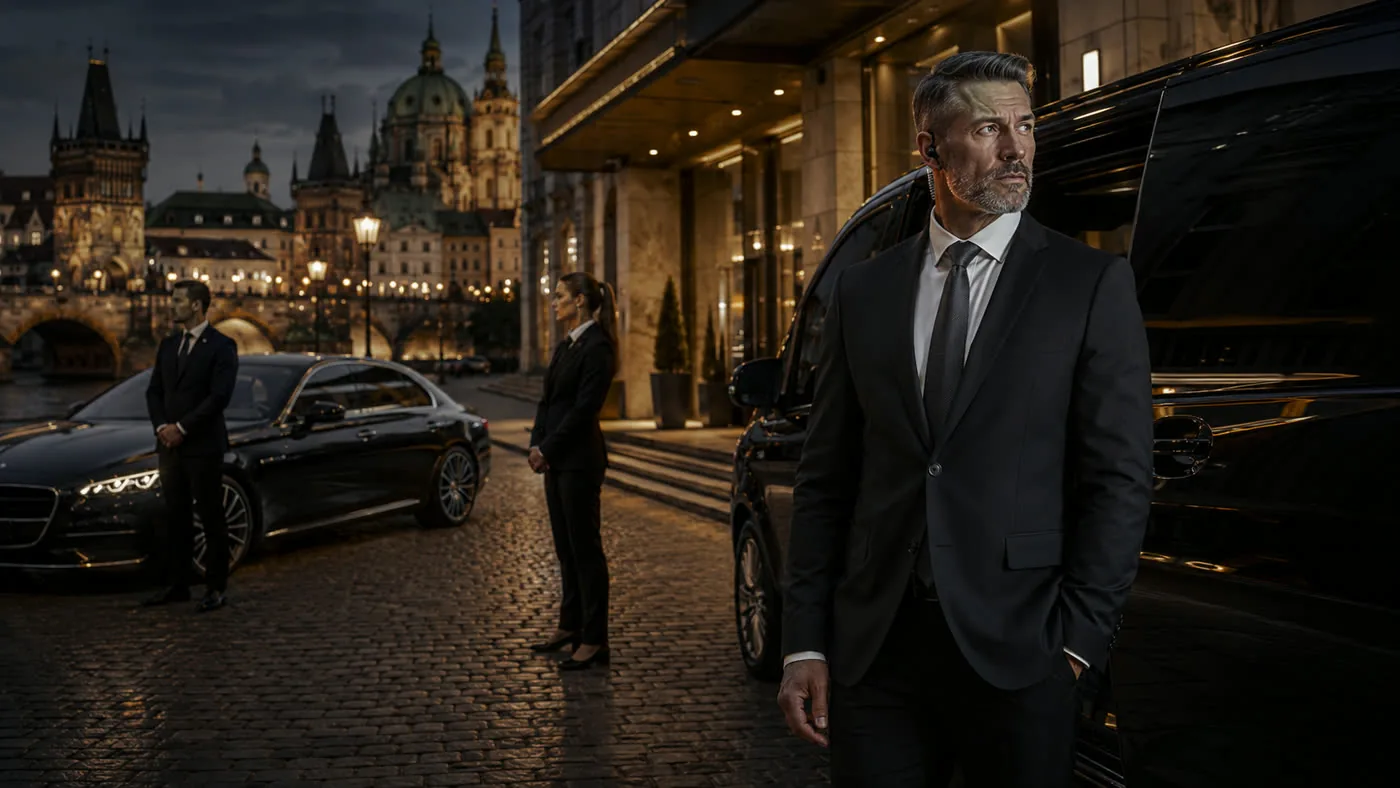
Most people picture close protection as a broad-shouldered man in a suit pushing through a crowd. In practice it is usually the opposite. A protection officer should be unobtrusive and blend into the setting of a meeting, a restaurant or an airport while staying ready to react.
The approach is adapted to the client and the situation. Sometimes you want the protection to be visible: at a public event, or where deterrence is itself the aim. At other times it is better for the protection officer to stay in the background and be taken for part of the entourage, a colleague or a driver.
Which of the two approaches to use is not a matter of taste. It depends on who the client is, where they are going, who else will be there and what needs to be minimised: the risk of a physical incident or, conversely, unwanted attention. You can't set up for both at once, and it's only fair to tell the client so in advance.
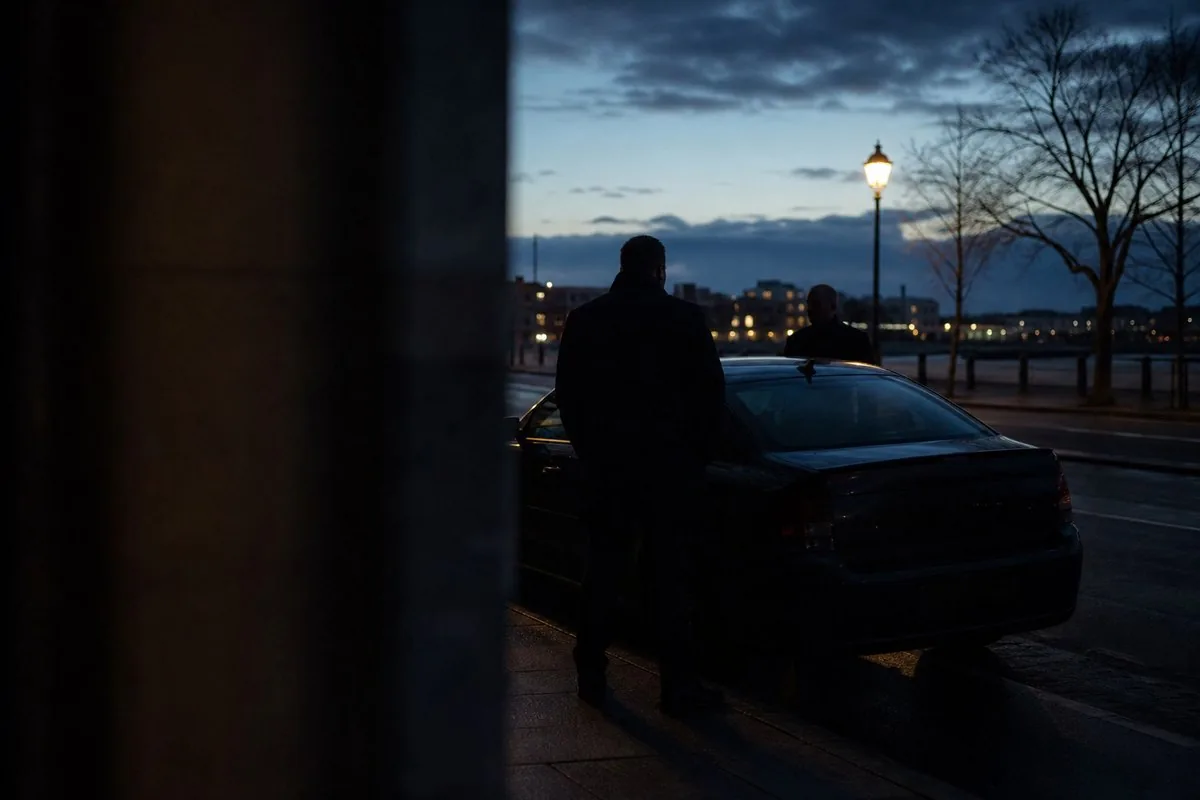
The route is planned before the client leaves the house
Before I set off anywhere, I go through the route on a map and, depending on the assignment, reconnoitre it on the ground as well. I'm not only interested in the fastest way. I'm interested in the places where someone with bad intentions would feel at home.
Typically these are stretches where the car is stationary with nowhere to go, narrow one-way streets, underground car parks with a single entrance, and areas outside an entrance where you have to wait. I also check the usual traffic at that time of day and whether anything is planned nearby that could disrupt it.
The first and last few metres get just as much attention. Getting into and out of the car are among the most vulnerable moments of any move: the client is outside, stationary and predictable. Most of what I plan is aimed at keeping those moments as few and as short as possible.
- where you can stop without the car being blocked in
- the route of the walk between the car and the entrance, and how much cover it offers
- who has access to the garage or reception at the destination
- what the alternative is if the main vehicle entrance is unavailable
- where the nearest hospital and police station are
Never just one route, and always somewhere to stop
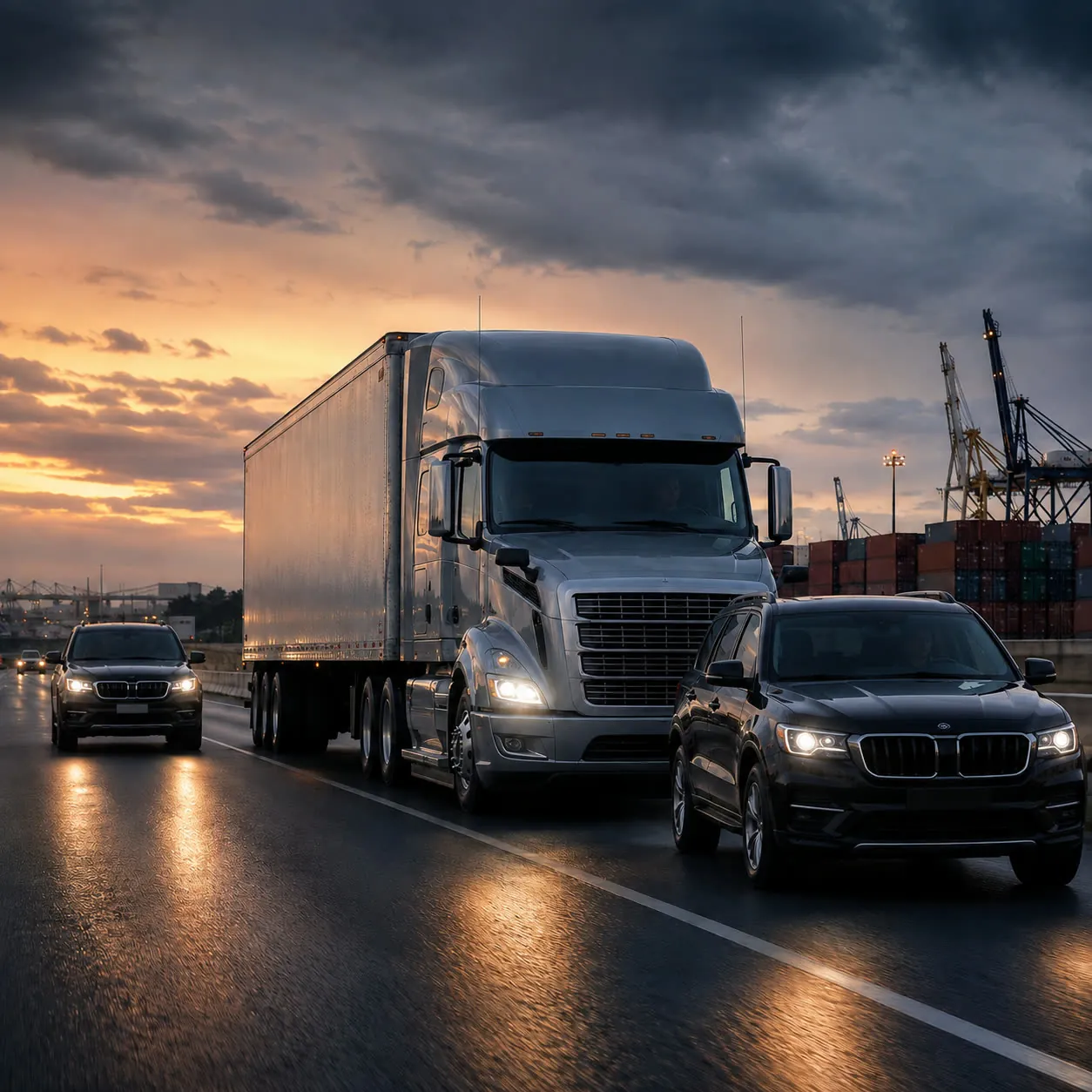
A rule I stick to: the primary route must always have alternatives ready. Not in theory but in practice. I know where I would turn off, how much time it adds and what to expect on the alternative.
The reasons for abandoning the primary route are usually entirely mundane: a road closure, an accident, a planned demonstration, a tailback caused by the weather. Risk rarely looks like an attack. Mostly it looks like sitting still in one place while everyone around knows exactly where you are and how long you'll be there.
As well as the routes, I set safe havens along the way. These are places you can divert to, where the client has somewhere to wait until the situation becomes clear: a hotel where we're known, a secured building, a building with a staffed reception, or the premises of an institution we work with. A safe haven is never improvised. It is agreed in advance, and I've checked that someone is on duty there at night as well.
The driver and the control room are part of the team, not an add-on
An escort usually goes hand in hand with a professional driver. I don't mean a chauffeur who knows the city. I mean a security driver trained in defensive and evasive driving, who understands why you never stop where you can be boxed in and why, at certain moments, nobody gets out of the car.
Teamwork between the driver and the protection officer can't be improvised on the day. It has to be agreed who opens the door, who watches the surroundings, who gives the signal to move off and what happens if the team gets separated. We go through all of this before the operation, not during it.
On long-term contracts and more demanding programmes, we also coordinate with a security control room. It tracks the vehicle's position and any changes to the route, and confirms that the team has arrived where it should. Technology doesn't protect anyone on its own, but it shortens the time before someone learns of a problem, and in protection that matters a great deal.
When something happens, the priority is getting out, not confrontation
The popular image is of a protection officer fighting during an incident. The real priority is different: getting the client away. An exit route, the car, a safe haven. Confrontation is a last resort. I go down that road only when there is no other option at that moment.
That is exactly why all the planning above matters. When something is happening, there is no time to decide which way out. That decision has to have been made that morning. All I do is choose from the options already in my head.
Over the years, experience has confirmed one thing for me. The situations that ended well were generally the ones where we could leave quickly, because it was clear in advance where to go.
Key takeaways
VIP protection isn't about strength, or about how many people walk around you. It's about how much work is done in advance: route analysis, fallback options, agreed safe havens, a driver who works in step with the team, and clearly assigned roles. With all that in place, the escort itself looks calm and unremarkable from the outside. That is exactly how it should look.
No measure can rule out every situation, and nobody can promise you that. What a well-prepared escort does is reduce the opportunities, shorten the moments of exposure and speed up the response when the programme changes. In practical terms, the client can focus on the meeting, the family or the journey without worrying about which way to go or what might happen.
If you're considering an escort for yourself, your family or visitors from abroad, I offer a no-obligation consultation. We'll go through your usual programme and the places you frequent, and I'll tell you frankly whether protection makes sense in your situation, on what scale, and what can be handled without it. You aren't committing to anything, and if it turns out you don't need any measures, I'll tell you so.
“You recognise a good escort by two things: nothing happened, and the client barely noticed it.”— Robert Václavík