I have been protecting people since 2009, and much of that work has taken place in hotel lobbies, on guest floors and in car parks, where from the outside nothing ever seemed to happen. This is an insider's account of how hospitality and discreet protection work together: what is prepared before a guest arrives, where the front desk and hotel security have a blind spot, and why protection done well is the kind that nobody notices.
Late evening in the lobby, where nothing seems to be happening
A typical late arrival goes like this. The car pulls up at the entrance. Someone opens the door, greets the guest by name, takes the luggage and walks with them to the lift. The key is ready, and there are no strangers in the corridor. The guest takes two phone calls on the way up and goes to bed. Nothing has happened.
That is precisely the point. When nothing happens, it is rarely by chance. It is the result of work that began several hours earlier, work the guest never sees. When a client tells me the next day that it was a calm arrival, I take that as a compliment.
A five-star hotel sells an experience without friction. That experience breaks down the moment a guest stops feeling safe, and it takes very little: someone lingering a little too long by the lift, a camera lens trained on the car park, a stranger who knows the guest's name when they have no reason to.
The front desk and security each do their job, but a gap remains between them
Front desk staff are trained for comfort, security staff for incidents. Both are needed, and in a good hotel both work well. Yet between the two roles lies a space that belongs to neither. Who walks the guest from the car to the lobby when a group has gathered outside the entrance? Who makes sure that two delegations who should not meet never cross paths on the same floor?
In practice, that gap is filled either by someone improvising or by no one at all. My job is to put someone in it who can do both: fit in naturally as part of the hotel's service while reading the space as a protection officer does. The guest experiences care; I look after the risk.
The difference shows most with guests who expect a high standard on both counts. Business owners, senior executives, wealthy families and foreign delegations rarely want visible security. They want the stay to run its course, with nobody paying them more attention than courtesy allows.
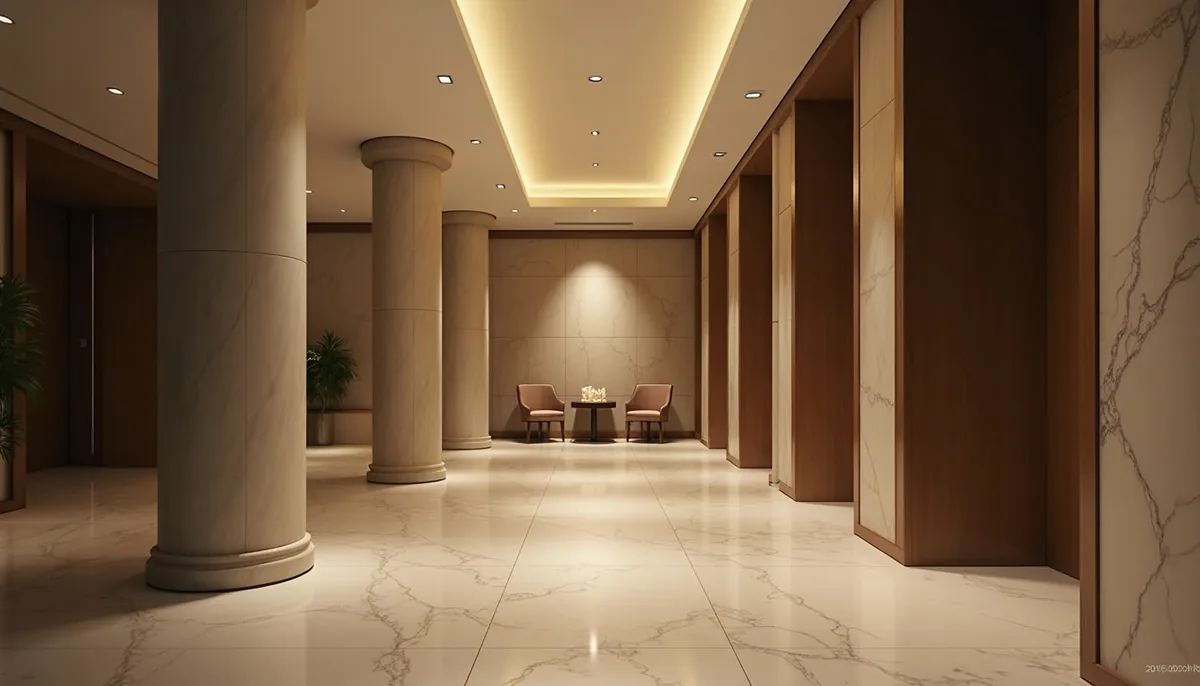
Most of the work happens before the client arrives
Before a guest arrives, my colleagues and I walk the hotel in person. Not from a floor plan, but through the corridors, stairwells, car park and delivery entrance. I look for ways in, places that are out of sight, and spots where someone could stand and wait without anyone finding it odd.
The list below varies from hotel to hotel and from client to client. What matters is that it is drawn up in advance and in writing, not over the phone when the car is already at the door.
- the route from the car to the door, and an alternative drop-off entrance in case it is busy outside the hotel
- the room's location and floor, the escape routes and the nearest stairwell
- an agreement with the hotel manager on which members of staff know what, and who does not need to know
- where the car will park, and a spot it can leave from quickly
- a direct contact for the night shift on the front desk and in security, so nobody has to be tracked down at night
- a procedure for an unexpected visitor who asks for the guest at the front desk
One person, two roles: welcome and protection
Welcoming a guest and protecting them are not two jobs for two different people. A protection officer who takes the luggage and opens the door keeps their hands in the right position and can see beyond the guest. Walking them to their room looks like courtesy; it is also a check of the corridor and the floor.
Several things can be settled at check-in: privacy at the desk so that nobody else overhears the guest's name, a room away from the busiest part of the floor, and a clear agreement on who may call the room and whose calls will not be put through. The guest rarely has to deal with any of it.
During the stay, it comes down to small things: an escort to the restaurant, a transfer to a meeting, a drive to the airport, quiet oversight of a private event in one of the hotel's smaller function rooms. I always try to make it look like hotel service rather than a security measure.
Discretion shows in behaviour, not in the suit
A discreet protection officer is not someone in dark glasses planted by the door, feet wide apart. That is the exact opposite. Discretion means moving naturally through the space, speaking quietly, never getting in the way of the hotel's operations and never looking as though you are guarding anything.
It also covers what nobody sees: not discussing the client with staff beyond what is necessary, taking no photographs, not sharing the schedule, and never confirming to anyone outside that the guest is even there. For wealthy families and foreign delegations, the fact that they are staying at all is often more sensitive than the stay itself.
That is why I expect my colleagues to master hotel etiquette as thoroughly as they master tactics. On the street, what counts is the reaction. In the lobby of a five-star hotel, what counts is making sure that, as far as possible, no reaction is ever needed.
What the hotel and the event organiser gain
Working with an external protection team lets a hotel offer a demanding guest something that in-house security, by its very nature, does not cover: protection tied to a specific person rather than to the building. The hotel keeps its own procedures and atmosphere. I adapt to the hotel, not the other way round.
At events, whether a corporate dinner, a private presentation, a wedding or a delegation visit, the focus is on entry points, privacy within the venue and quietly dealing with people who do not belong there. Many of these situations can be settled without fuss, as long as someone addresses them early rather than after they escalate.
The organiser then does not have to spend the evening watching who comes through the door, and can concentrate on the programme and the guests.
Luxury and safety belong together
Combining hospitality with protection is not an add-on to the stay. It is a way of keeping the experience intact. The guest should feel looked after and at ease, not aware that someone is on alert.
The key points: in a hotel setting, much of the security comes from preparation and arrangements made in advance, not from intervention. A protection officer who passes for part of the service in the lobby gets closer, and sooner, than one who is obvious at first glance. Neither the front desk nor building security covers protection tied to a specific person; that has to be brought in from outside. And information about who is staying where, and when, is among the more sensitive things worth protecting.
I have protected people on the street and in hotel lobbies since 2009. If you are planning a stay, an event or a visit and want this side of it arranged in advance, get in touch. There is no obligation: I will go through the situation with you, and together we will work out what makes sense and what is unnecessary. All enquiries are handled in confidence.
“When protection in a five-star hotel is done well, the guest has no story to tell.”— Robert Václavík