A security escort for a lorry is not just another car in the mirror. Here I explain how I go through the route with a client, why cargo is most vulnerable when it is standing still, and what the driver needs to know before setting off.
Most escort enquiries only come after the first incident
A typical call about protecting a lorry shipment does not reach me at the planning stage. It comes after something has already happened. A dispatcher or the owner of a haulage firm rings to describe a slashed tarpaulin at a rest area, part of a consignment gone missing, or a driver who feels the same vehicle has been behind him ever since loading.
At that point I am no longer dealing with prevention but with the aftermath, and the aftermath is much harder to handle. The damage is done, the insurer wants to know what happened, the customer wants to know about the delivery date, and the driver is shaken at best.
That is why I am writing this mainly for those who have not had a problem yet. I don't treat the transport of valuable or sensitive cargo as logistics with a security add-on. I treat it as a security operation with a logistics plan, and a second plan alongside it: a security one.
Risk is not spread evenly along the route
Most kilometres on European motorways are uneventful, and that is good news. Problems do not cluster on the open road. They cluster at the points where a vehicle has to slow down, stop, leave the main route or wait: industrial estates, overcrowded rest areas, diversions, the last few kilometres to the loading bay.
So the first thing I do with a client is break the route down section by section. Not a general “we're driving through this country”, but the specific points where the cargo loses momentum and becomes predictable. And predictability is exactly what makes the other side's job easier.
Before the lorry leaves, I need to be clear on at least the following:
- where the vehicle will be forced to stop, and for how long
- which car parks and rest areas I will use and which I will avoid
- which stretches the lorry will cover at night and which in daylight
- an alternative route in case of closures or traffic jams
- conditions at the loading and unloading sites, and who has access there
- who at the sender's and the recipient's end knows about the consignment and its timing
Cargo is most vulnerable when it stands still
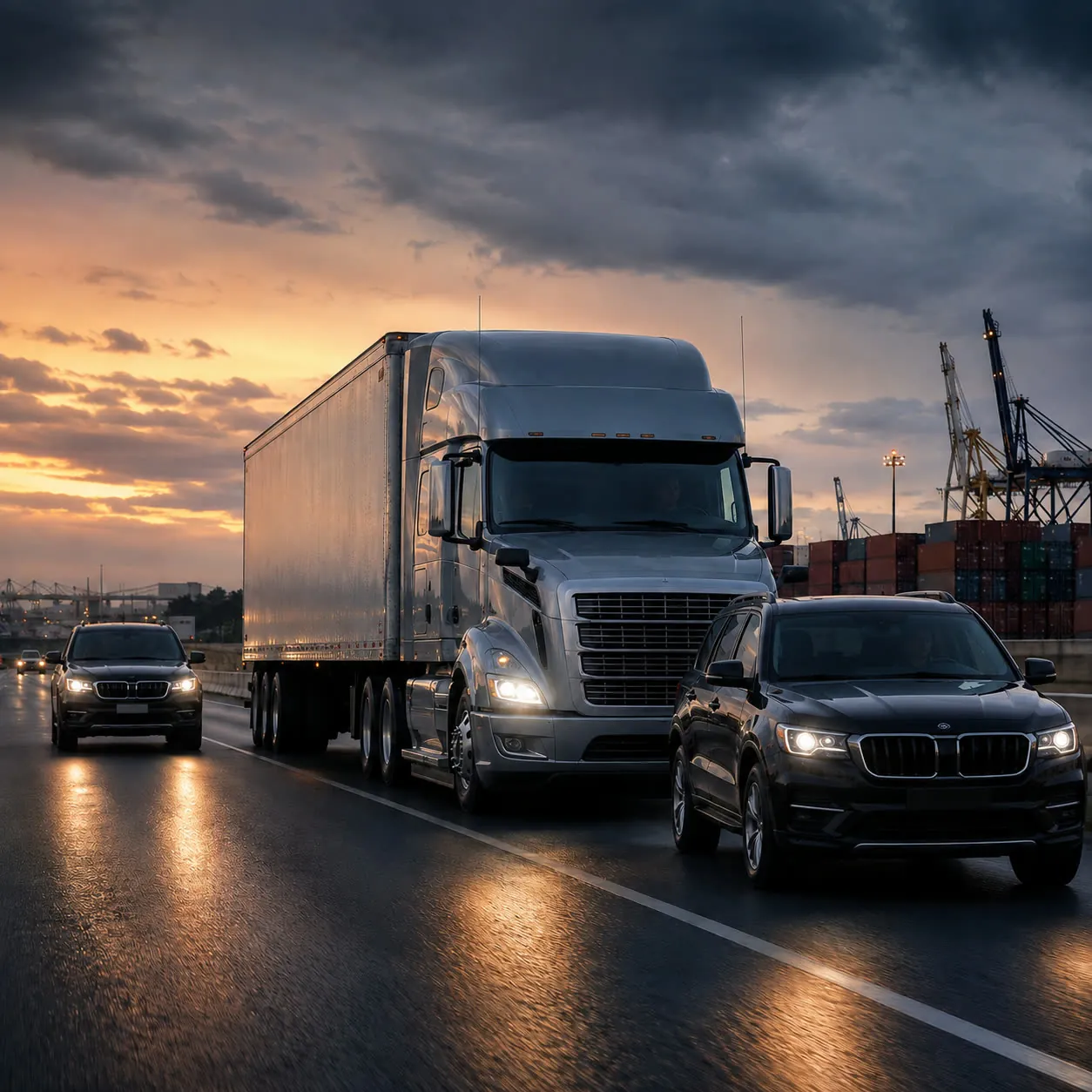
A moving lorry is a fairly awkward target. Most of the problems I have seen or dealt with over the years arose while the vehicle was stationary: a mandatory rest break, waiting at the loading bay, a queue at a checkpoint, a breakdown, a driver who has gone for a coffee.
That is why I plan stops in advance as points in the operation, not as “wherever it happens to work out”. The difference is fundamental. A pre-selected location means I know how you get in, how you get out, and where the escort vehicle will be positioned relative to the trailer.
During a stop, the escort crew is not watching the lorry. The lorry is fine. They are watching the surroundings: who arrived after us, who was already there, who is moving around the vehicle for no obvious reason. That is the difference between being by the vehicle and seeing what is happening around it.
The driver is part of the team, not part of the load
The most common mistake I see with booked escorts is a trivial one: the escort has been paid for, but nobody has properly briefed the driver about it. Then, at the critical moment, nobody knows who is supposed to be listening to whom.
Before departure, the driver and I go through several specific situations. What to do if someone approaches them in a car park. Who to call first. What to do if they lose contact with the escort. What to do if an unmarked vehicle pulls them over. How to act if they suspect they are being followed.
Instructions have to be short and simple, because a tired person needs to recall them at three in the morning. A complicated procedure does not work at that hour. We also agree what is not to be discussed during the journey: not on the phone, not in a car park and not on social media. A leak about the cargo is still the cheapest way to complicate a transport job.
Customs posts inside the EU have gone, but national differences remain
An escort across the whole European Union sounds simple on paper. In practice, every country has its own rules on what a security crew may do on its territory, what equipment it may carry, how it notifies its presence and how it works with the local authorities.
I settle this before departure, not at the border. Preparation also means knowing who to contact in each country if something happens, and in which language that call will take place. When you are standing beside the lorry at night, far from home, there is no time to work out who to call.
A cross-border route also means the team is on the road for a long time. That is why I plan crew rotation and rest, so that the people who need full awareness at the end of the route actually have it. A tired escort is just extra cargo.
Discretion doesn't mean passivity
An escort that is obviously an escort at first glance does part of the other side's work for them. A conspicuous vehicle, eye-catching kit and showy behaviour only tell everyone around that this cargo is worth watching. That is exactly the opposite of what I want.
I have never needed my people to look impressive. I need them to notice things: to notice before a situation escalates, and to know how to step back where stepping back is the right call. Deciding to wait, change the stopping point or replan the rest of the route is proper work, not failure.
For me, being prepared means having worked through the scenarios in advance. A breakdown. Suspected surveillance. An attempt to stop the lorry somewhere unusual. A road accident. A driver's health problem. None of this is exotic, and none of it can be improvised once it happens.
Key takeaways
The safety of a transport job is not decided on the motorway. It is decided in the preparation, on three points: knowing the specific risk locations along the route, planning stops in advance as part of the operation, and having a driver who knows what to do. An escort without this behind it really is just another car in the convoy.
An escort makes most sense where the cargo is of high value, where it is sensitive to information leaks, where the route crosses unfamiliar territory, or where a delay or loss would be a bigger problem than the value of the goods themselves. It may be a one-off consignment or a regular route; the preparation differs only in scale.
If you have a transport job coming up and you are unsure about it, I am happy to take a look. I will go through the route, the timing and the nature of the cargo with you and tell you whether an escort makes sense in your case. Sometimes the answer is simple and inexpensive: a different departure time or a different place to stop. The consultation carries no obligation, and everything we discuss stays confidential.
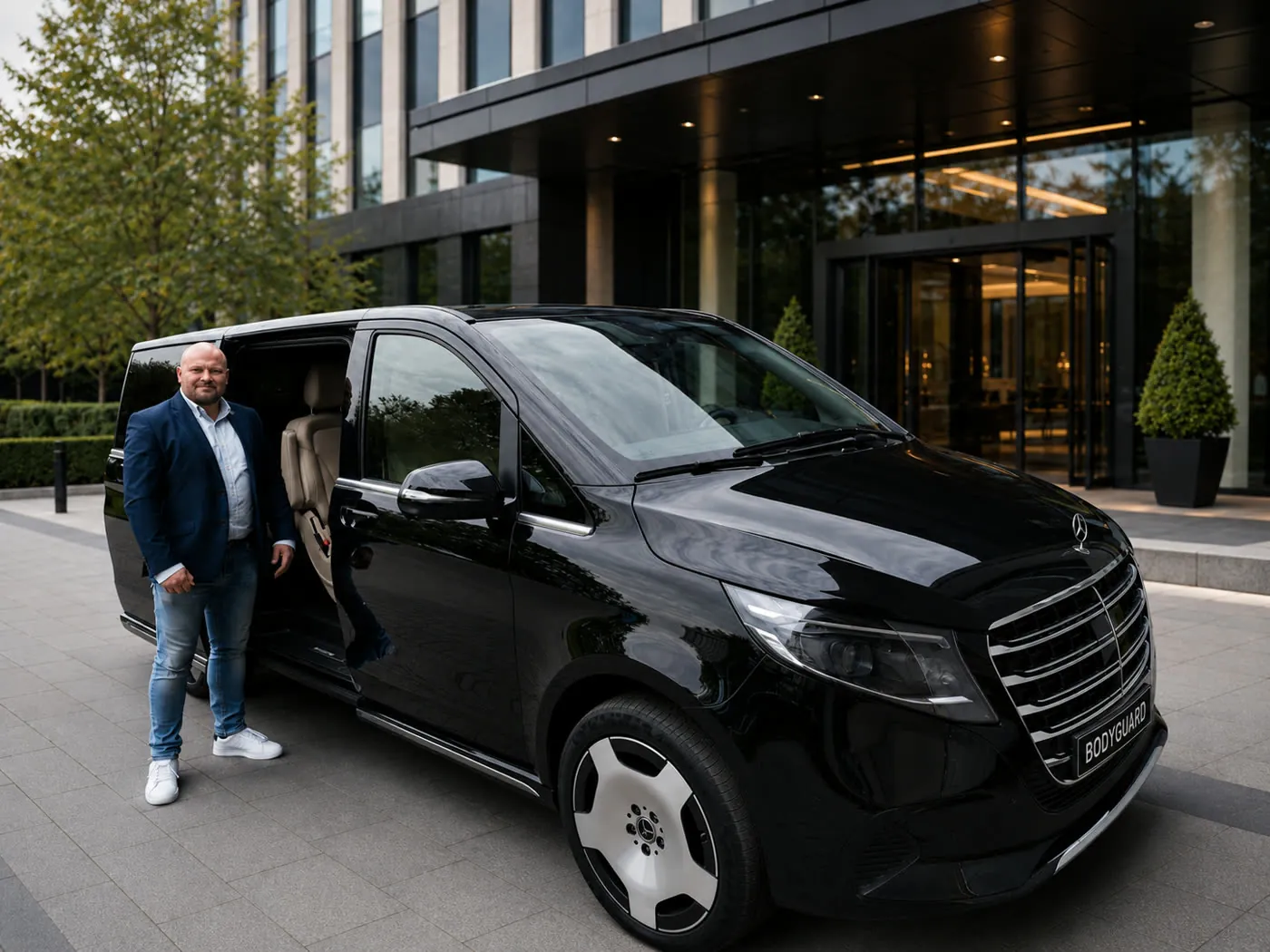
Robert Václavík, founder of Bodyguard Group®. I have been protecting people and property since 2009.
“The safety of a transport job isn't decided on the motorway but when you plan where the lorry will stop.”— Robert Václavík