Modern close protection combines discretion, tactical thinking, premium client service and the ability to anticipate risks before they materialise.
I have worked in close protection since 2009, and I'll say it plainly: what once served as the foundation of this profession is no longer sufficient on its own. Clients are more demanding, risks develop faster, situations change in seconds, and a mistake costs more than it ever has.
Modern executive protection has long since stopped being only about a protection officer standing beside the client. It isn't only about strength, appearance or an air of authority. Protection today combines discipline, intelligence, situational awareness, communication, tactical thinking, technology, discretion and the ability to anticipate.
And this is exactly where our profession is changing dramatically.
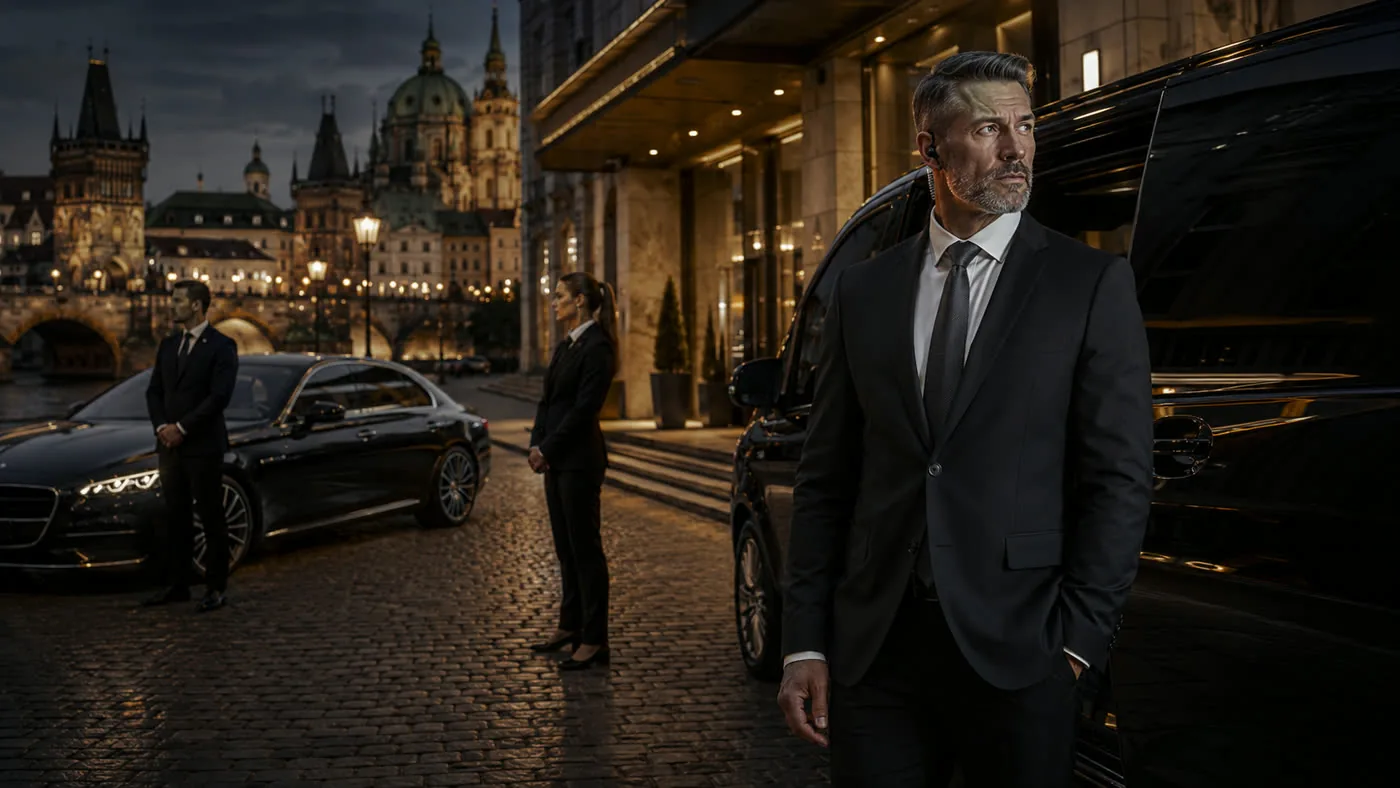
A new standard of close protection
Executive protection today rests on far broader foundations than it once did. A protection officer has to read the environment, sense the mood of the people around, assess potential threats, plan routes, communicate with the client, coordinate the team and handle information, while staying calm, discreet and professional throughout.
They must be ready for physical risk, but their mental resilience matters just as much.
This combination is what separates the mere presence of security staff from genuine, professional executive protection.
A generational change in the profession
As the demands on protection grow, the profession is also going through a fundamental generational shift. The old guard, who learned the job through practice, discipline, respect, responsibility and the ability to handle any situation, is gradually making way for a new generation. And I feel it very keenly.
The people who join us today grew up in a different world from mine: faster, more saturated with information, and used to instant feedback on everything. That brings different strengths, and different areas that need building up, above all independent decision-making and the ability to take responsibility for their own judgement. I don't say this as a criticism. It is simply the starting point, which is exactly why we begin with the fundamentals.
And yes, it's an enormous struggle. That is precisely why it's worth fighting.
Protection officers aren't made overnight
At Bodyguard Group® we see developing our own people as a long-term process. I don't believe a few weeks can turn anyone into a protection officer you would trust with a client. Claiming otherwise would be neither honest nor responsible, to them or to the client.
A good protection officer takes years to make. Through training. Through mistakes. Through pressure. Through discipline. Through humility. And above all, through real experience in the field.
That is why we give people starting out with us the most valuable thing we have: time. Not a course, not a certificate, but time with seasoned colleagues on live operations.
We teach them to think. To read a space. To understand context. To carry responsibility. To work under pressure. And we teach them that protection is not about ego, posing or a photo on social media.

From basic habits to elite performance
Anyone entering this field has to understand one fundamental thing. Executive protection is not about looking like a protection officer. It is about actually being one.
The difference shows the moment pressure arrives: uncertainty, a change of plan, a crisis. That is when you see who is just repeating phrases they have learnt and who really thinks, observes and acts.
That is why we put so much weight on the basic habits that protective work cannot do without: discipline, punctuality, focus, awareness, communication, physical readiness, discretion, powers of observation, respect for the team and responsibility towards the client.
Without these foundations, no one grows into a good protection officer. And without good protection officers, there is no truly first-class executive protection.
The joy of watching a new generation grow
Preparing a protection officer is a long process built on discipline, responsibility, situational awareness and real practical experience. And for all the obstacles along the way, it is a pleasure to watch people grow.
When you see a young person who at first didn't know where to stand, how to read a situation, how to react or how to take responsibility, and who over time really starts to grow, both professionally and as a person, you know the time was well spent.
They begin to understand space. They begin to think ahead. They begin to read the client, the team and the environment. They begin to understand that a good protection officer is not the one who draws attention to themselves, but the one who keeps people safe with calm, composure and discretion.
And it is in moments like these that we see the future of our profession.
Our responsibility to the future of the profession
We are all getting older. Time can't be stopped. Each of us has only a limited window in which to make a difference. Within it we make many decisions and many mistakes, do a lot of good work and achieve plenty we can be proud of.
But if we are in a position today to shape the next generation, pass on our experience and set the right course, that is not just an opportunity. It is a responsibility.
The future of executive protection will not rest solely on technology, luxury vehicles, modern equipment or polished presentations. All of that matters. On its own, though, it isn't enough.
The future of protection will rest on people. On character. On discipline. On humility. On the capacity to grow. On a willingness to learn. And on those with the patience to guide young people, even when it isn't always easy.
A true elite is cultivated
Executive protection is changing. Those who fail to grasp this will very soon find themselves out of touch with reality.
Our job is not only to protect clients today. It is also to help build the professionals who will protect clients tomorrow. That is why at Bodyguard Group® we believe in training, discipline, humility and working with people over the long term.