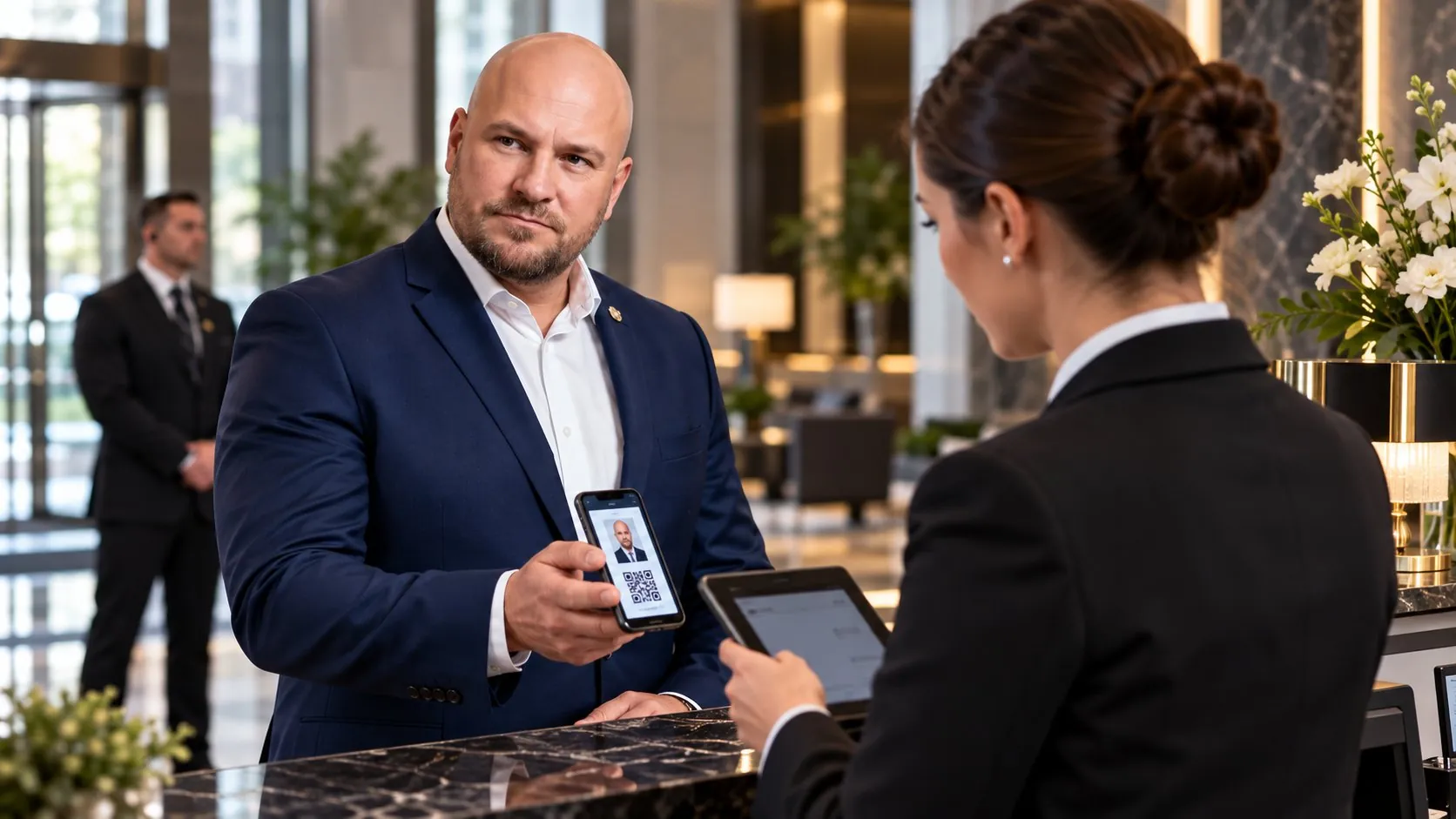
Safe school runs rest on clear authorisation, verified changes and a disciplined flow of information between family, school and those accompanying the child.
An illustrative scenarioIt is 3.18 pm. The driver is waiting outside the school in the usual spot. A few minutes before lessons end, a message comes in: today’s plans have changed, someone else will be collecting the child, and the child is to be taken on to a different address.
The message looks genuine. It gives the child’s correct name, the time school finishes and the name of the afternoon activity. It does not stir up any panic or ask for anything obviously out of the ordinary. That is exactly why one question matters, and neither the tone of the message nor the number of familiar details in it can answer it:
Who is actually authorised to change the plan?

And more importantly: how does the person on the ground know that the instruction genuinely came from someone with that authority?
Routine works until something changes
An ordinary school day has fixed points. The child finishes at a known time, the school knows who usually collects them, the driver knows where the pick-up is and the family has planned what happens next. A settled routine like this cuts down the number of decisions that have to be made under time pressure.
Legitimate changes, however, happen all the time. An after-school club starts later, a parent is held up in a meeting, a colleague stands in for the nanny, the driver falls ill, the school moves pick-up to another entrance or the family decides to go straight to the airport. A change is not suspicious in itself. It is an ordinary part of life.
A security system should therefore not be judged only by whether it works on a normal day. The harder test is whether it handles an exception safely: who may initiate it, who must confirm it, who is told and what happens if confirmation cannot be obtained. The procedure for a change should not be improvised. It should be a decision path that everyone knows in advance. The same emphasis on a workable daily routine runs through Family security starts with prevention and a calm routine.
Knowing the details is not proof of identity
Social engineering does not always start with someone breaking into a phone or email account. It often relies on context that sounds convincing. The names of family members, the school, the make of car, a sports club, an assistant, photos from a regular activity or the usual arrival time may be known to a wider circle of people, turn up in old correspondence or be partly in the public domain.
Those details can make a message persuasive. They do not, however, establish authority. Knowing the child’s name proves only that the sender knows the name. Knowing the timetable proves only that the sender has seen the timetable. Neither fact means that the sender is entitled to change the handover location.
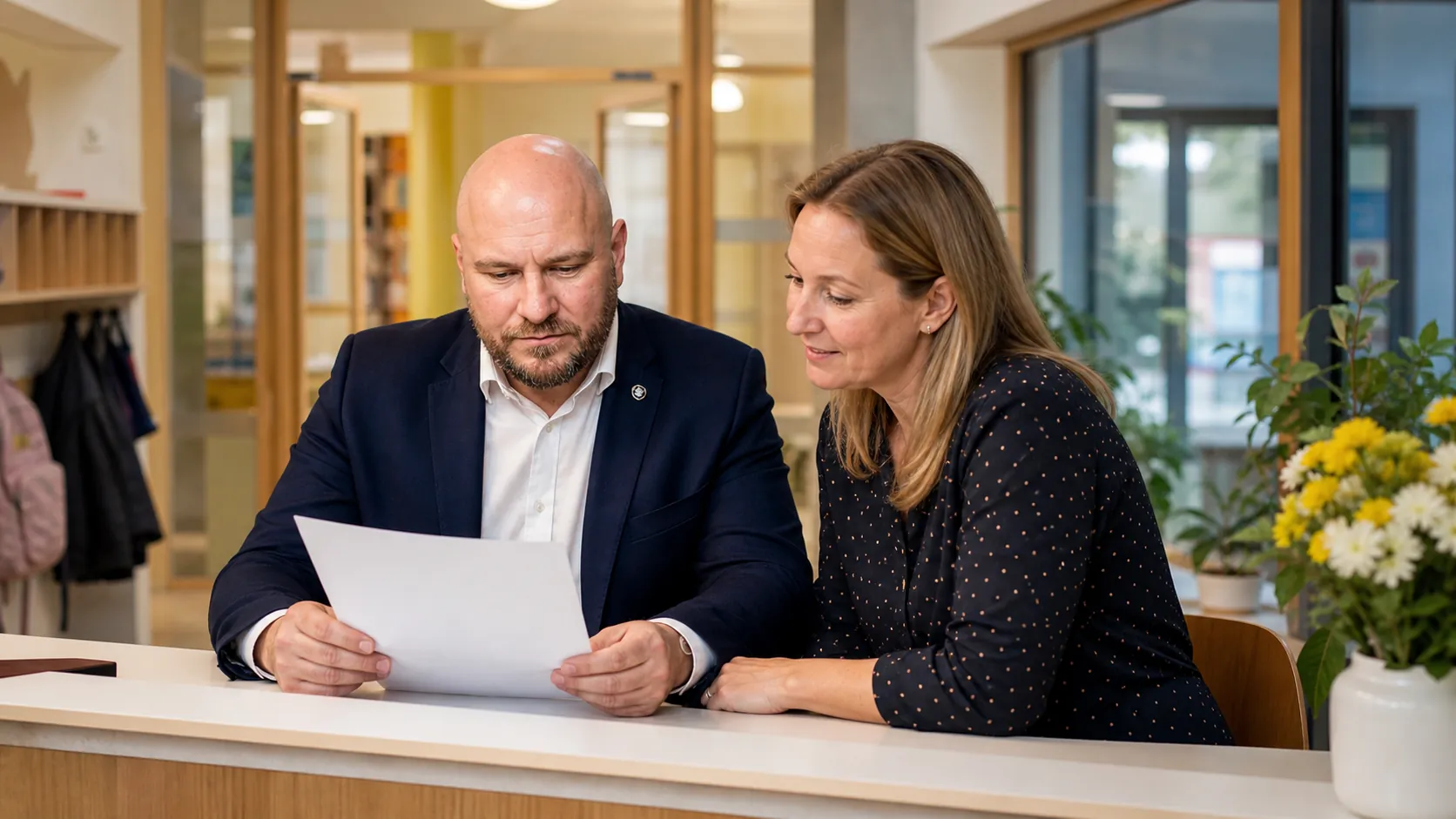
In its cyber-hygiene guidance, ENISA stresses the importance of verifying the sender’s identity before responding to requests involving sensitive information. [1] The same defensive principle applies beyond the purely digital environment: the content of a message is evidence to consider, not automatic proof of authority.
What a message says is only a starting point. The authority to change the plan must be established by a process agreed in advance.
Who has the authority to change the plan?
Every family needs to decide in advance on a small, easily understood circle of people who may change the child’s plans. This will usually mean the parents or legal guardians. Depending on how the household works, the authority may also extend to a named relative, a family assistant, the head of the protection team or someone else with a clearly defined role.
A list of names is not enough. The scope of each role also matters. One person may be permitted to move the collection time but not to change the destination. Another may alter transport arrangements but not the identity of the person receiving the child. In a small household the structure may be very simple; for a family with several residences, staff and frequent travel, it will be more detailed.
There is no one-size-fits-all model. The arrangements must reflect the child’s age, how the family operates, the school’s rules and any legal restrictions. Where court orders or a dispute between guardians come into play, the system must take them into account precisely, working with the school and a legal adviser. A security routine is no substitute for legal advice.
A change needs its own method of verification
An unexpected instruction that arrives through one channel should not also be the only proof that it is genuine. There should be an agreed, independent way of checking it: for example, making contact through a number or account you already know, obtaining confirmation from a designated person, or another simple procedure the family can realistically keep up.
Independence matters more than technical complexity. A reply in the same message thread proves only that the other party controls that thread. Calling a number contained in the unexpected message merely verifies a contact supplied by the message itself. A stronger check is to return to a contact point that was known in advance.
The person outside the school should not have to decide on instinct, urgency or fear of delaying the programme. They should know whom to contact, what counts as “confirmed” and what to do if the authorised person is unavailable. If verification cannot be completed, that is not an accusation against the sender. The change simply remains unconfirmed and is not carried out until the agreed conditions are met.
The school, driver, nanny and protection team do not need to know everything
A secure system is not one in which everyone knows the family’s entire day. The school needs to know who may collect the child and how changes are accepted. The driver needs a verified time, handover point and destination. The nanny needs information relevant to care and the next part of the programme. A protection team may require broader context, but even that should match the actual scope of the task.
In security, this is known as the need-to-know principle. It cuts unnecessary sharing, leaves less room for misunderstanding and makes responsibilities clearer. If only the arrival time changes, there is no reason to send round the entire weekly itinerary again.
The EU principle of data minimisation follows a similar logic: use only the personal data necessary for the stated purpose. [2] In a family routine, its main value is organisational. It does not mean withholding information from people who genuinely need it; it means not adding recipients or detail without a clear reason.
ChecklistWhen today’s plan changes
- Define in advance who may change the plan and the limits of that authority.
- Agree one everyday channel of communication and an independent way of confirming changes.
- Treat knowledge of personal details as context, not as proof of identity.
- Keep the list of authorised people and key contacts up to date.
- Set a safe default procedure for any change that cannot be verified.
- Once a change is confirmed, make sure everyone affected is working from the same, up-to-date version of the plan.
What happens when something doesn’t add up?
A different person, a different vehicle, a changed location, conflicting information or a missing confirmation does not necessarily mean an attack. Often it is an ordinary mistake, a delayed message or an update that was passed on badly. That is exactly why the response should be calm and predictable.
The defensive principle can be summed up as “stop and verify”. The change is put on hold, the child stays in the agreed safe place and the matter is passed to the designated contact point. Who speaks to the school, who calls the family and who confirms the next step should be decided in advance for each particular arrangement.
Crucially, the person on the ground does not need to get to the bottom of the whole story. They do not have to decide whether the message is a mistake, a manipulation or a misunderstanding. They only need to recognise that the conditions for changing the plan have not yet been met. A well-designed default procedure protects the child while stopping every small discrepancy from turning into chaos.
The child should not carry the burden of security
A professional arrangement should not teach a child that every unfamiliar person is a threat. It should not turn the ordinary journey home into a security drill or burden the child with adult conflicts. Most of the work should be done by the system around them.
A child can learn a few simple rules suited to their age. They should know which adults are safe people to turn to, that they can stay with a teacher or another designated person if they are unsure, and that they are not expected to judge an unexpected change on their own. An older child may have more independence, but should still not be the only point of verification for an instruction about their own transport.
The NSPCC recommends that, when talking to children, adults use the specific idea of a “safe adult” rather than asking children to work out in the abstract whom they can trust. [6] What matters is that the rules reassure the child and give them permission to say when something does not feel right. Security should be visible in how the adults behave, not felt as a constant fear in the child’s mind.
The family’s digital footprint connects the screen to the street
A photograph outside the school, a picture of the new timetable, a tagged sports club, a regular post from an activity, a public calendar or a photograph shared by household staff may each appear harmless. In combination, however, they can reveal a pattern: where the child goes, at what time and who normally accompanies them.
Location data from a phone or smartwatch, photo metadata, publicly visible events and posts published in real time can have the same effect. UNICEF advises parents to check who can see a child’s photographs and location, and to explain the idea of a digital footprint in language suited to the child’s age. [4] European data-protection authorities also stress that children’s data deserves particular protection. [3]
This is not an argument for banning social media, nor does every photograph create an immediate risk. The practical aim is to avoid needless precision: post later rather than live, do not share a complete timetable, check who can see your posts, remove location data you do not need and agree the same standards with assistants, nannies and drivers. One detail on its own is usually just a fragment. The risk grows when fragments repeat and build into a predictable picture. What your phone reveals about you before you even say hello looks at this layer in more depth.
When professional protection makes sense
Not every family needs full close protection, and wealth alone is not an automatic reason for a bodyguard. What decides it is the family’s specific risk profile. Closer attention is warranted where there is greater public visibility, a specific threat, stalking, conflict between adults, significant exposure of assets, complicated travel or intense media interest.
Bringing in professionals does not have to start with permanent physical protection. It often makes sense to begin with a discreet review of the family routine: who knows the schedule, how changes are confirmed, where the repeated handovers between school, car and home take place, and whether everyone is working from the same information. The outcome may be a change of process, safer transport, temporary accompaniment or a combination of measures within UHNW Family Security or Executive Protection.
Where there is a specific threat or dangerous stalking, it may be necessary to involve the Police of the Czech Republic and legal counsel. [7] A private protection arrangement does not replace the public authorities; it deals with the practical side of safety, getting around and everyday life. See also Stalking, threats and doxxing: how to respond without panic.
Security the child barely notices
The best school run does not look like a show of force. The child leaves school, meets a familiar face, gets into the car that is waiting and carries on with the day. The important work has already happened in the background: the right people knew their roles, the change had an identifiable author, the instruction was independently verified and everyone was working from the same version of the plan.
A system like this does not need to be complicated. It needs to be clear, up to date and usable when time is short. It must also protect the child’s privacy and let them lead an ordinary life, without making them feel like the centre of a security operation.
So the question is not just who is collecting the child today. The more important question is who may change that arrangement, and whether the person outside the school can verify the change without having to improvise. Safety often comes not from the most visible protection but from trust that has been properly organised.
FAQFrequently asked questions
Does a child from a wealthy or well-known family always need a bodyguard?
No. The level of protection should be based on the specific risk, not social status alone. For many families, clear authorisation, secure information-sharing and periodic review may be sufficient.
How should a change of pick-up person be handled safely?
The change should come from an authorised person and be confirmed independently by the person on the ground, using the agreed procedure. Until that confirmation arrives, the original plan or the safe default stands.
Is it appropriate to share a school timetable through an ordinary messaging app?
The app is only one factor. The security of accounts and devices, who is in the group, how long messages are kept and how much detail is shared all matter. A complete timetable should not be posted to a large group unless every member genuinely needs it.
What if the child wants to change the plan?
The child may suggest a change, but for younger children it should be approved by an authorised adult through the agreed process. For older children, independence should reflect age, maturity and the actual risk.
How should the school, driver and family assistant work together?
Each needs a clear role, a known contact point and the same, up-to-date version of any change. They do not need the family’s entire itinerary; they need the information relevant to their responsibility and a way to verify exceptions.
When does it make sense to audit the family’s security routine?
When the child changes school or the household staff change, after repeated communication failures, during a house move, or where there is frequent travel, stalking, conflict or increased media attention. An audit does not have to lead to a protection team; it often identifies a handful of process changes that make a real practical difference.
Sources and further reading
- ENISA: Cyber HygieneVerifying the sender’s identity, handling unexpected requests cautiously and protecting sensitive information.
- European Commission: Principles of personal data processing under the GDPRData minimisation, access limitation and data protection by design.
- European Data Protection Board: ChildrenThe special protection owed to children’s personal data and the need for clear communication.
- UNICEF Parenting: Online privacy checklist for parentsPhotographs, location, app permissions, the digital footprint and age-appropriate family rules.
- Europol: Geosocial networking – What you need to knowThe risks of sharing location, profile information and photographs publicly.
- NSPCC Learning: Why language matters: “safe” rather than “trusted” adultsExplaining the idea of a safe adult in terms children of different ages can understand.
- Police of the Czech Republic: Nebezpečné pronásledování (stalking)Guidance on stalking, misuse of personal data and situations of immediate danger.
- Czech Ministry of Education, Youth and Sports: Metodická pomůcka k aplikaci GDPR ve školstvíHow schools handle personal data, including information about a person authorised to collect a child.
Sources were checked on 17 August 2026. These security principles are not a substitute for legal advice on a particular family or school situation.
A discreet first stepNeed a routine that still works when the plan changes?
If you are looking at family security, school runs or a routine that has to stay reliable when plans change at short notice, Bodyguard Group® can start by assessing the situation discreetly and then propose a proportionate solution.
Arrange a discreet consultation