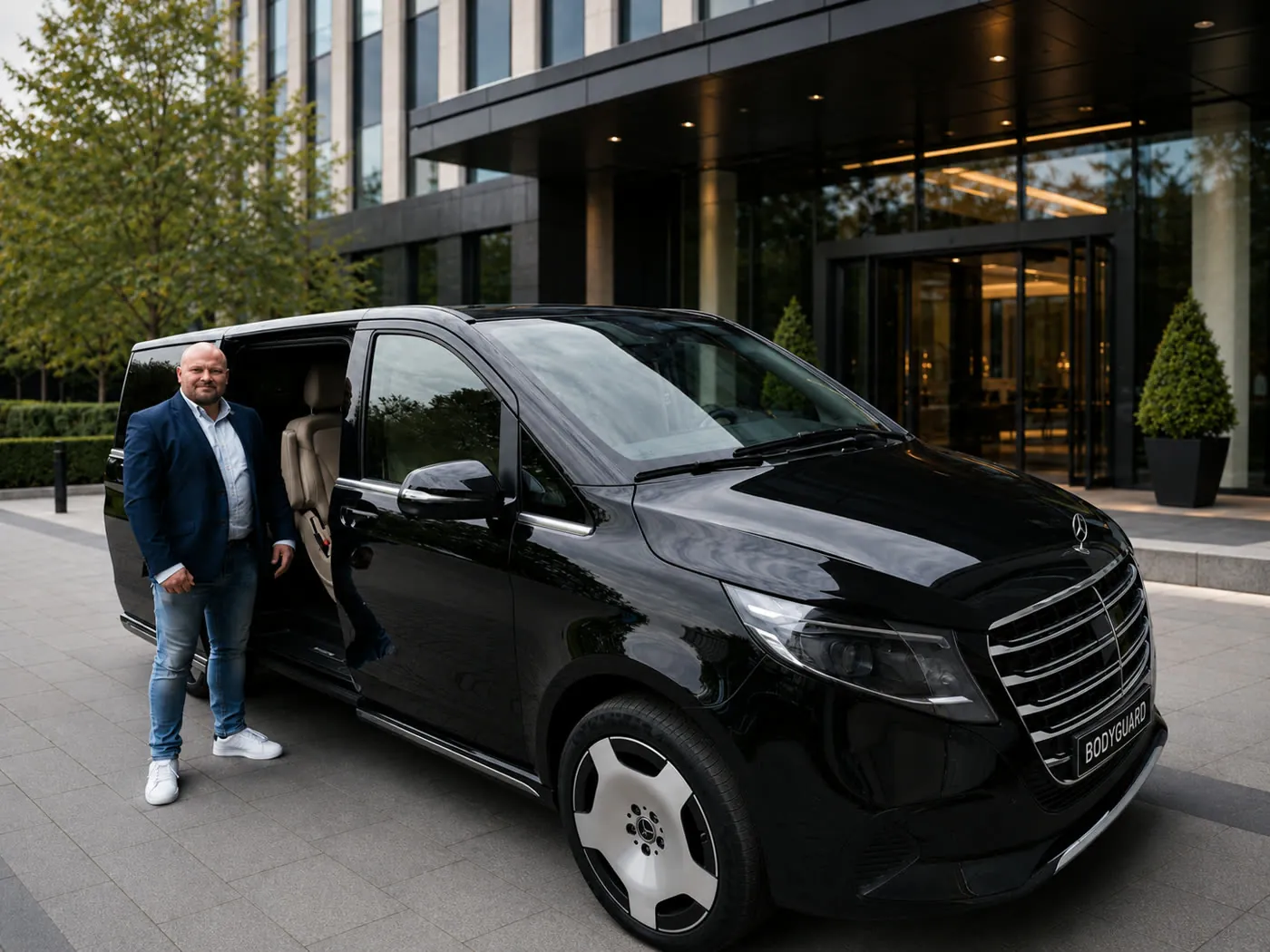
A secure transfer is never just about the car and the driver. I am also thinking about timing, the route, getting in, the surroundings and communication, so that the client arrives smoothly, discreetly and without unnecessary exposure.
A transfer starts before the client steps outside
When a client calls me about a transfer, my first question is not about the make of car. I ask about the departure point, the destination, the time window, how important the meeting is and anything that could change the level of risk. Without that information, even a good vehicle is just a means of transport.
I treat secure transport as a managed process. From the outside it can look simple: the client gets in, the car pulls away, the client gets out at the destination. Inside the team, though, preparation, checks and decision-making run the whole time.
I don't plan a transfer around the ideal scenario. I plan it so that the team knows what to do if there is a delay, a change of route, a blocked driveway, a crowd at the entrance or an unexpected media presence.
Transfers often go wrong over small details that never appear in the itinerary. A poorly signed vehicle entrance, a closed barrier, no contact at reception or a lift that is running late can leave the client standing exactly where they should not be.
A route is more than a line on the sat nav
Before we set off, I assess the current security situation, traffic conditions, the time window for the transfer and potential risk points along the route. Sat nav will show you the fastest option, but it won't tell you whether that option suits a protected person.
A risk point might be a narrow entrance, a poorly lit spot, a long wait at an entry ramp, an awkward stop at the kerb or a space where the car cannot easily turn round. These details can only be handled if the team has thought about them beforehand.
For higher-profile transfers, I also work with a fallback option. It doesn't have to be a dramatic plan. It is enough to know which way to drive off, where to stop, who to call and how to move the client somewhere safer.
- the current security situation
- traffic conditions
- the time window for the transfer
- potential risk points along the route
The vehicle and the crew have to be ready at the same time
I check the vehicle's technical condition as routinely as the crew's readiness. Fuel, a clear view, working communications, navigation, documents, access to the garage and room for luggage are not minor details. If something is still being sorted out at the moment of departure, the client is already standing somewhere exposed.
The crew must know their roles. The driver concentrates on driving and the traffic around them, while the escort watches the client getting in and out and the space around them. With a larger team, coordination must never happen loudly in front of bystanders.
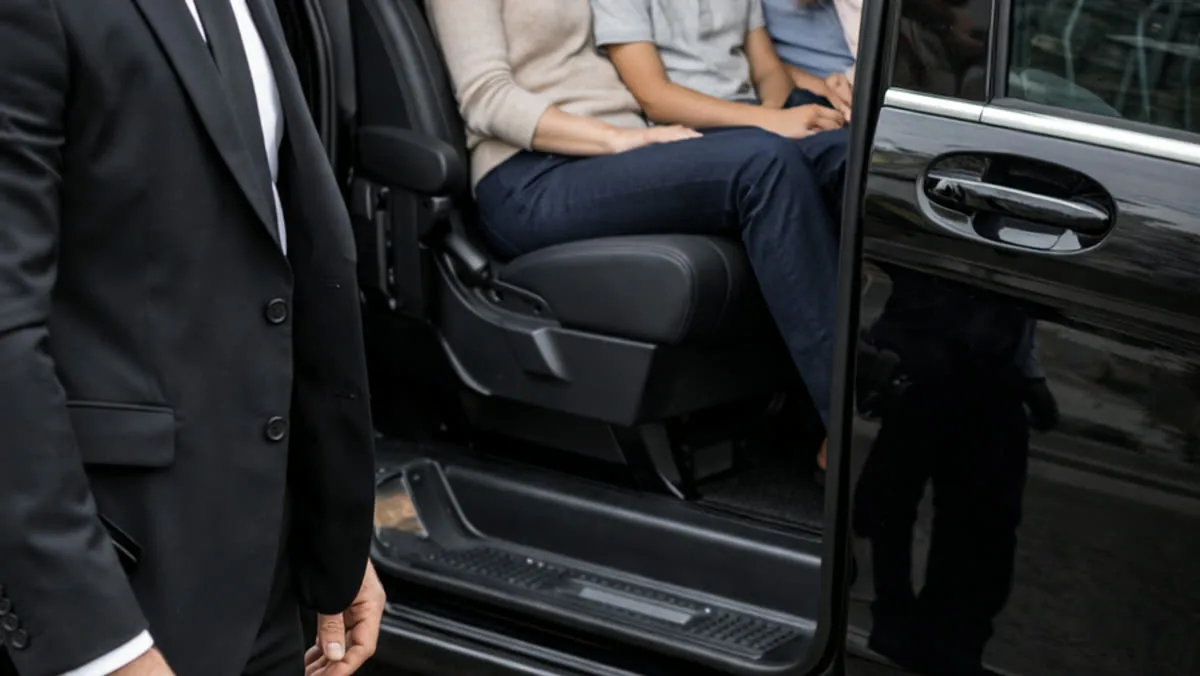
The plan for stopping and picking up is often the weak point. The client should get in smoothly, without looking for the door or waiting on the pavement. With good preparation, everyone knows where the car will stop, who opens the door and which way the client will approach.
On regular routes, I also watch for habits. If the client always leaves the same way, at the same time and through the same door, they become predictable. Sometimes a small change in organisation is enough to reduce unnecessary exposure.
- the vehicle's technical condition
- the crew's readiness
- coordination with other team members
- the plan for stopping and for getting in or out
Getting in and getting out are the most sensitive moments
During the drive, the client is in a relatively controlled environment. They are most exposed when getting in and out. The door is open, the pace slows and the people around have a chance to come closer.
That is why I check the surrounding area before the client even gets out. I watch how people are moving, the directions of approach, the options for withdrawal and whether the location matches what was agreed. If it doesn't, it is better to change the drop-off point than to force the plan through at any cost.
Getting a client into the car safely and smoothly is not theatre. It is a short, coordinated sequence that keeps time in the open to a minimum without drawing more attention than necessary.
At hotels, office buildings and airports, I therefore also agree the details with the arrival point in advance. If local staff do not know which vehicle entrance to use or where the lift should be waiting, needless delays follow. Good coordination is often less visible than the escort itself.
- checking the surrounding area
- getting the client in safely and smoothly
- keeping time in the open to a minimum
- discreet coordination between team members
On the move, I watch the surroundings, not just the road
The driver watches the traffic, the movement of nearby vehicles and the behaviour of other road users. The escort handles information about the destination, contact with the receiving party and any changes to the programme.
Not every delay is a security problem. What matters is telling an ordinary traffic hold-up apart from a situation that increases the client's exposure. Typically that means standing for a long time in an unsuitable spot, the same vehicle turning up nearby again and again, or a change at the destination entrance.
Communication within the team should be brief and calm. The client does not need to hear every operational consideration, only what will affect their decisions or their schedule.
Comfort and safety on the road should not be mutually exclusive. The driver must drive smoothly and predictably, without putting needless pressure on other road users. I don't regard aggressive driving as protection. It is simply another source of risk.
The bottom line: a good transfer is unobtrusive and well prepared
A secure VIP transfer is not about fast driving or a conspicuous escort. It is a series of small decisions that reduce exposure and give the team room to respond when circumstances change. In practice, it is this quiet preparation that makes the difference.
If you are planning regular transfers for senior management, a visit from abroad or a sensitive journey for your family, it is worth reviewing the route and the arrangements in advance. A no-obligation consultation will show where protection is needed, where good organisation is enough, and where extra measures would only complicate the day.
“You can tell a transfer is secure when the client can forget about the journey and focus on why they are making it.”— Robert Václavík